

Hair thinning rarely feels like a small change. It can alter the way patients style their hair, feel in photos, and move through everyday life. For some, it begins as extra shedding in the shower. For others, it appears as a widening part, a receding hairline, or less density at the crown. The earlier these changes are evaluated, the more options patients may have.
That is where PRP can become an important part of a hair restoration plan. Platelet-rich plasma uses concentrated components from the patient’s own blood to support the scalp and encourage healthier follicle activity. When paired with low-level laser therapy, PRP may become part of a more complete approach to hair growth, targeting both follicle stimulation and scalp environment.
Keep reading to learn how these therapies work together and why a diagnosis should always come first.
What Is PRP?
PRP stands for platelet-rich plasma, a regenerative treatment that uses growth-factor-rich plasma from the patient’s own blood.
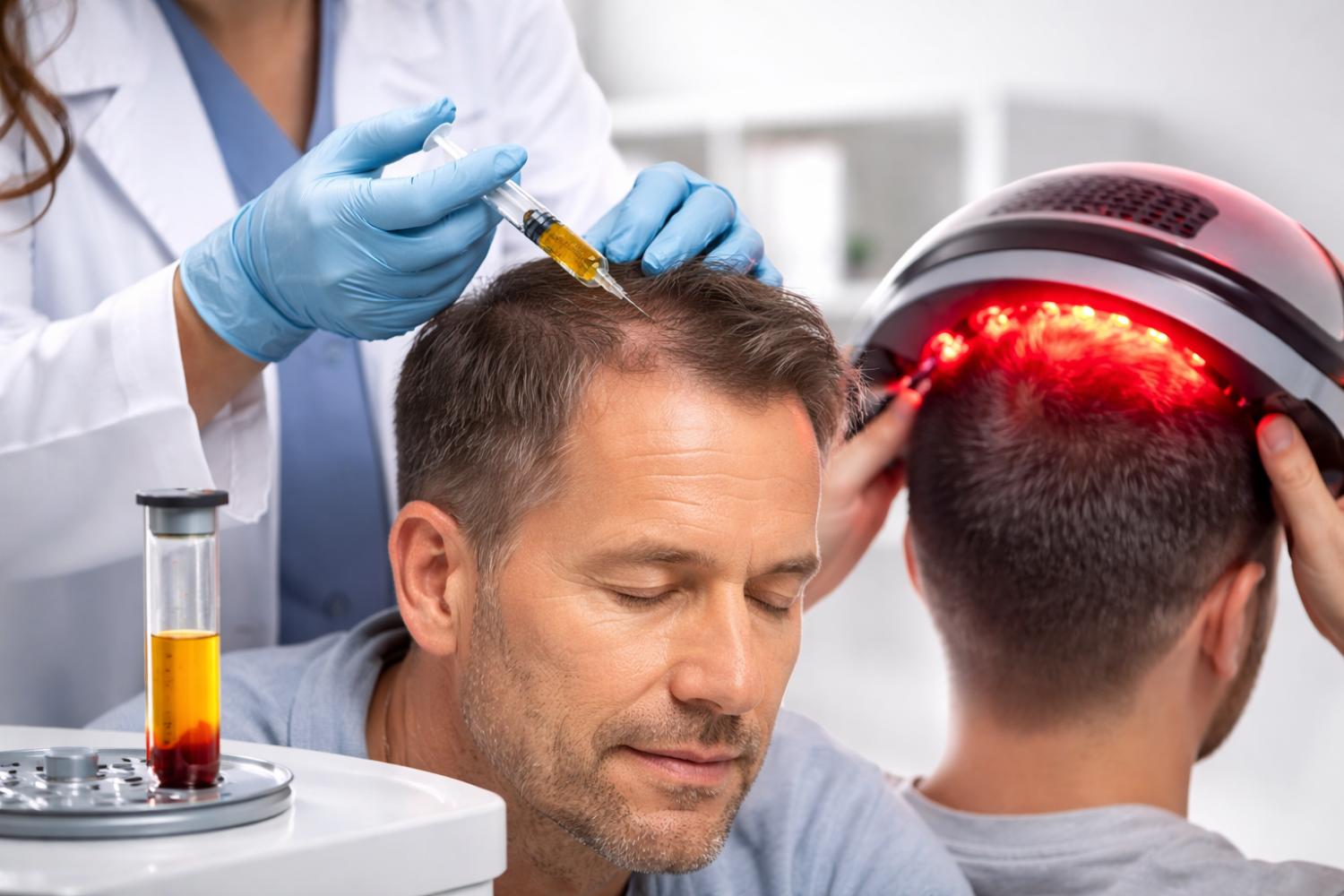
During treatment, a small blood sample is drawn and processed in a centrifuge to separate and concentrate the platelets. These platelets contain growth factors that may support tissue repair, cellular signaling, and follicle activity. The PRP is then carefully injected into targeted areas of the scalp where thinning or shedding is present.
The reference image notes that PRP may be used as a stand-alone treatment or as part of a broader hair restoration program, and that an accurate diagnosis is important before beginning any hair treatment. That point matters. Hair loss can come from genetics, hormones, stress, illness, nutrition, medications, autoimmune conditions, scalp inflammation, or several causes at once.
Clinical research continues to evolve, but published reviews have described PRP as a promising option for androgenetic alopecia, while noting that preparation methods and protocols vary between studies.

Why Combine Therapies?
Hair growth is biological, not cosmetic alone. A follicle must receive enough oxygen, nutrients, cellular energy, and signaling support to produce stronger hair. When hair begins thinning, the issue is often not solved by one pathway alone. That is why combination therapy can be so valuable.
Low-level laser therapy, often called LLLT, uses red-light wavelengths to stimulate scalp activity. Reviews note that LLLT has been reported to stimulate hair growth in men and women with androgenetic alopecia, and FDA-cleared laser devices have been available for this indication since 2007.
PRP and laser therapy support hair growth from different angles. PRP delivers concentrated growth factors directly into the scalp. Laser therapy helps energize the follicle environment through light-based stimulation. Together, they may help create a more favorable setting for healthier-looking hair.
1. PRP Delivers Growth Factors
PRP is valuable because it brings concentrated platelet-derived growth factors to areas where follicles need support.
These growth factors help communicate with cells involved in repair, regeneration, and tissue health. In the scalp, that support may help follicles that are weakened but still active. This distinction matters because PRP is generally more useful for thinning areas than for completely bald areas where follicles are no longer functioning.
For patients searching for PRP hair restoration, the goal is usually to improve thickness, density, and scalp vitality over time. It is not an instant fix. Hair grows slowly, and follicles need time to respond.
Patients often need a series of treatments followed by maintenance sessions to support long-term progress. This is why PRP works best as part of a plan rather than a single appointment.
2. Laser Therapy Energizes Follicles
Low-level laser therapy works differently from PRP, which is why the pairing can make sense. LLLT uses specific light wavelengths to stimulate activity within the scalp. It is believed to increase blood flow and cellular metabolism around follicles, helping move resting or weakened follicles toward the active growth phase.
DermNet describes low-level laser therapy as being believed to increase blood flow in the scalp and stimulate metabolism in follicles, supporting the production of anagen, or growth-phase, hair.
For patients looking into laser therapy for hair loss, this treatment can be appealing because it is non-invasive and can support scalp activity between in-office visits. It does not replace PRP, but it can help maintain stimulation between treatment sessions.
The best results often come from consistency. Laser therapy may be recommended on a regular schedule, while PRP is performed periodically in the office.
3. They Support Different Phases
Hair grows in cycles, and successful treatment should respect that biology. The hair cycle includes growth, transition, resting, and shedding phases. Treatments like PRP and LLLT are not designed to force instant growth. Instead, they help support follicles as they move through these natural phases.
PRP may help create a stronger regenerative signal in the scalp. Laser therapy may help keep the follicle environment more active and energized. When combined, they can support both the biological messaging and the daily stimulation that follicles need.
This can be especially useful for androgenetic alopecia treatment, where follicles gradually miniaturize over time. The goal is to intervene before thinning becomes advanced, helping existing follicles produce healthier, stronger strands.
4. They May Improve Density
Many patients do not want dramatic promises. They want density they can see and feel. Thinning hair often looks less full because individual strands become finer and fewer hairs remain in the growth phase.
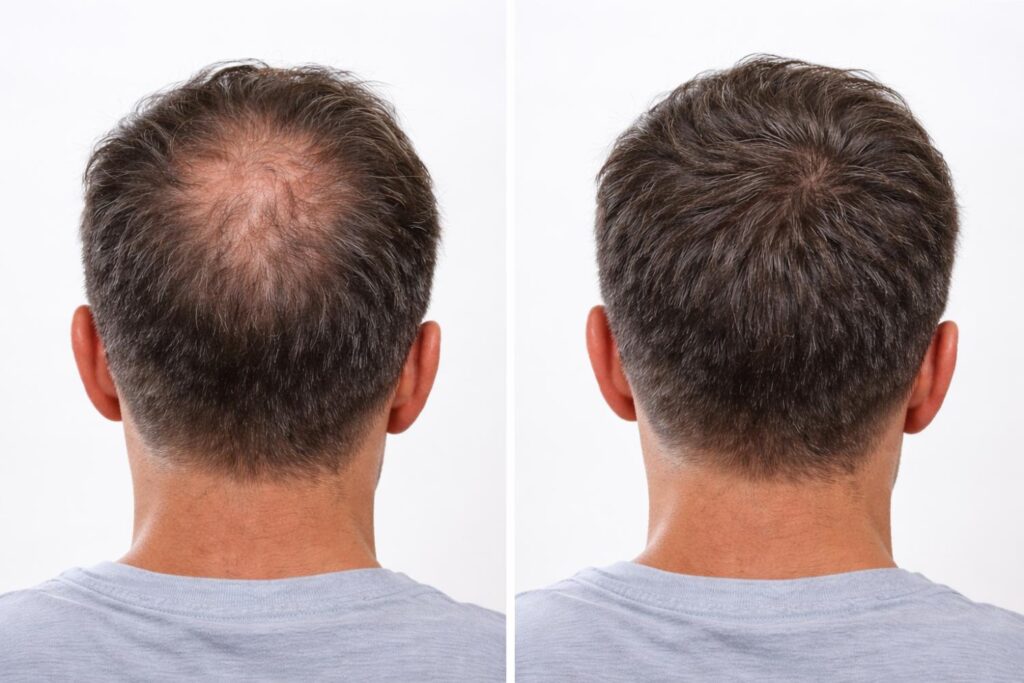
PRP may help improve the quality of follicle signaling, while laser therapy may support blood flow and cellular activity. Over time, this can help some patients notice fuller-looking coverage. Studies on PRP have found improvements in hair density in some settings, though results can vary based on preparation, patient selection, and treatment protocol.
This is why the consultation is so important. Not every patient has the same cause of thinning, and not every scalp will respond the same way. The most responsible approach is to set realistic expectations: improved density may be possible, but treatment requires time, consistency, and proper diagnosis.
5. They Can Help Men and Women
Hair loss affects both men and women, though the patterns may look different. Men may notice recession at the temples, thinning at the crown, or a more visible scalp along the top of the head. Women may notice a widening part, diffuse thinning, or reduced ponytail volume. Both can be emotionally challenging.
PRP and laser therapy may be considered for eligible men and women with thinning hair, especially when follicles remain active. This makes combination care useful for patients who want restorative and preventive support.
For those searching for PRP for thinning hair, the best starting point is an evaluation. The provider may assess pattern, scalp health, medical history, labs, medications, and family history before recommending treatment.
6. Diagnosis Comes First
A beautiful hair restoration plan begins with knowing why the hair is thinning. Not all hair loss should be treated the same way. Shedding after illness, postpartum hair loss, thyroid-related thinning, iron deficiency, autoimmune hair loss, medication-related shedding, and pattern hair loss all require different strategies.
The reference image wisely emphasizes that a board-certified dermatologist with special training in hair is highly qualified to evaluate hair loss and that an accurate diagnosis is important before beginning treatment. This is not just a formality. It protects patients from wasting time on the wrong therapy.
If the underlying cause is inflammation, deficiency, hormonal change, or scarring, PRP and laser therapy may need to be paired with other treatments or may not be the first priority.
7. They Work Best Early
Timing matters in hair restoration. PRP and laser therapy are most effective when follicles are still present and capable of activity. Once an area becomes completely bald for a long period, non-surgical treatments may have limited ability to restore growth.
This is why early evaluation is so valuable. Patients do not need to wait until thinning is severe. A widening part, increased shedding, reduced density, or a receding hairline can all be reasons to schedule an assessment.
Early treatment may help preserve existing hair and support stronger growth before hair loss progresses further.esotherapy, KeraFactor Skincare, and EnerJet delivery, to create comprehensive, non-surgical solutions.
Stronger Growth, Smarter Care
Hair thinning can feel personal, but patients do not have to navigate it with guesswork. The best hair restoration plans begin with diagnosis, then build a layered strategy around the patient’s scalp, pattern of loss, goals, and long-term maintenance.
At Rapaport Hair Institute in New Jersey, patients can explore PRP as part of a thoughtful, medically guided approach to hair growth. PRP supports the scalp with concentrated growth factors, while low-level laser therapy helps stimulate follicle activity between visits.
Together, these therapies may help patients pursue fuller, healthier-looking hair with a plan that is restorative, preventive, and grounded in expertise.
Get in touch with us today to schedule your consultation!