

Meet Dr. Rapaport
at Rapaport Hair Institute
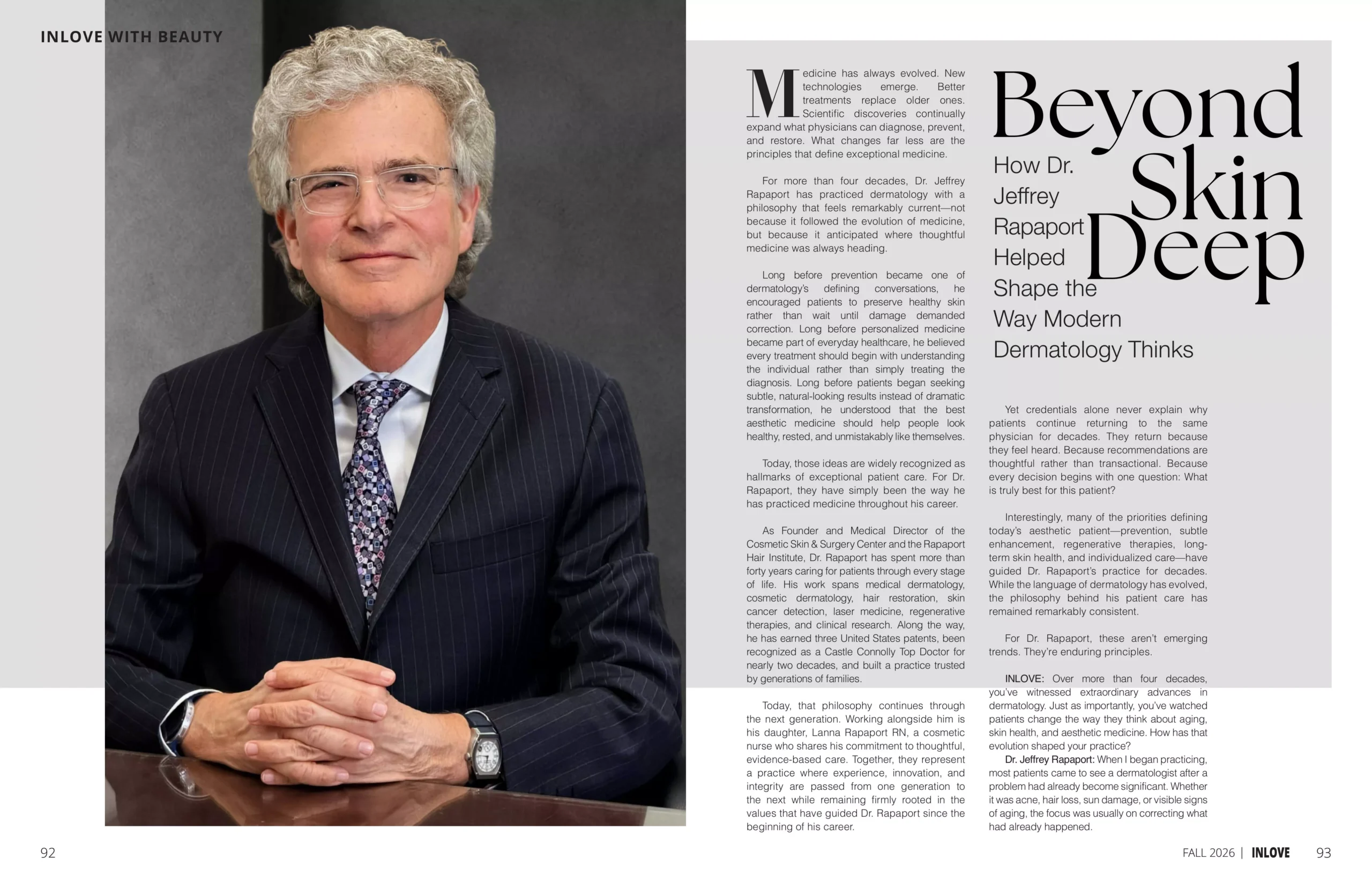
For more than four decades, Dr. Jeffrey Rapaport has practiced dermatology with a philosophy that feels remarkably current, not because he followed where the field was headed, but because he was often already there.
Long before prevention became a defining conversation in dermatology, he encouraged patients to preserve healthy skin rather than wait for damage to demand correction. Long before personalized medicine became standard, he believed every treatment should start with understanding the person, not just the diagnosis. Long before patients began favoring subtle, natural-looking results over dramatic change, he understood that the best aesthetic medicine helps people look healthy, rested, and like themselves.

About Dr. Jeffrey Rapaport
As Founder and Medical Director of the Cosmetic Skin & Surgery Center and the Rapaport Hair Institute, Dr. Rapaport has cared for patients through every stage of life across medical dermatology, cosmetic dermatology, hair restoration, skin cancer detection, laser medicine, and regenerative therapies. He holds three U.S. patents, has been named a Castle Connolly Top Doctor for nearly two decades, and has built a practice trusted by generations of the same families.
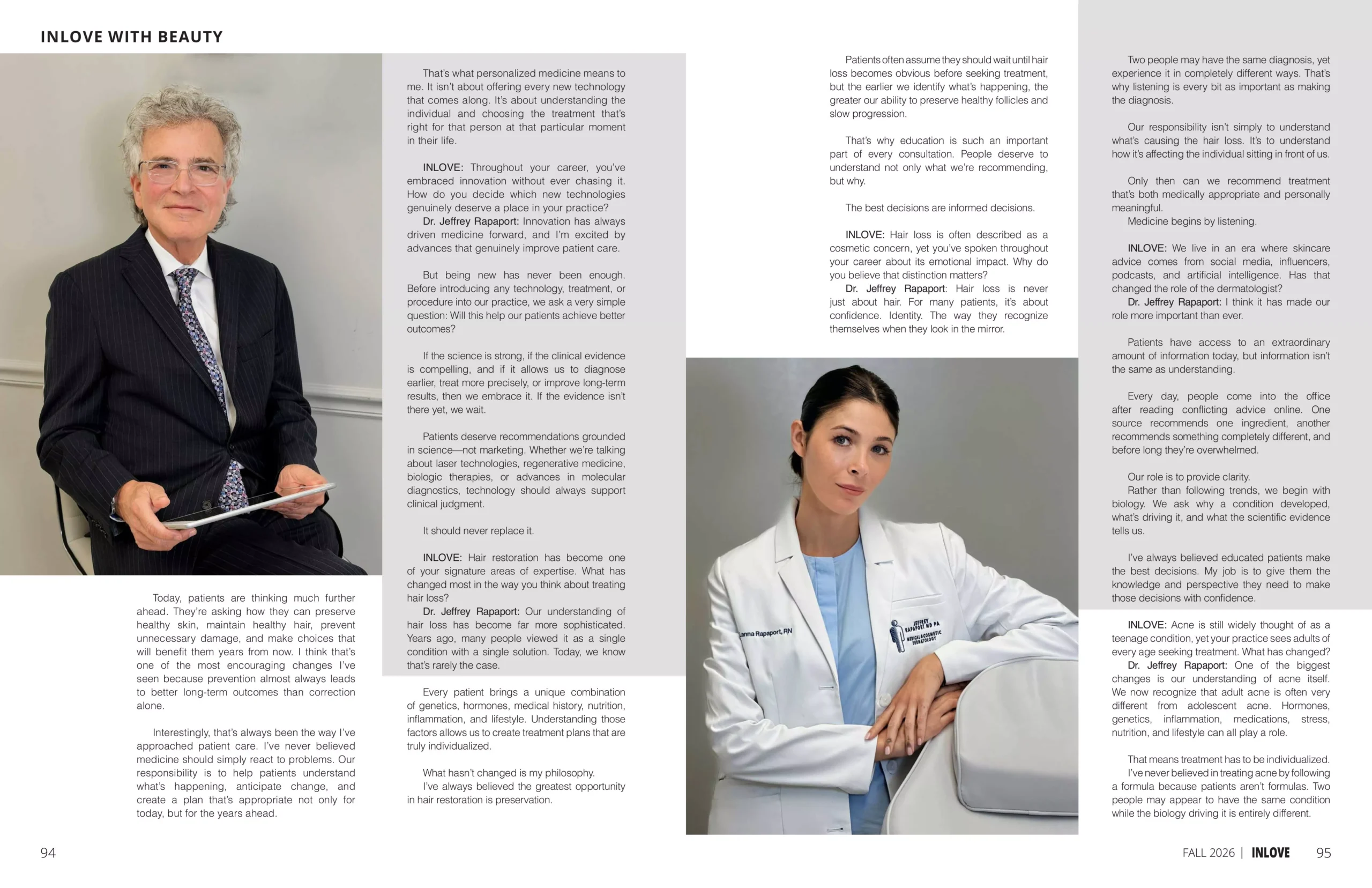
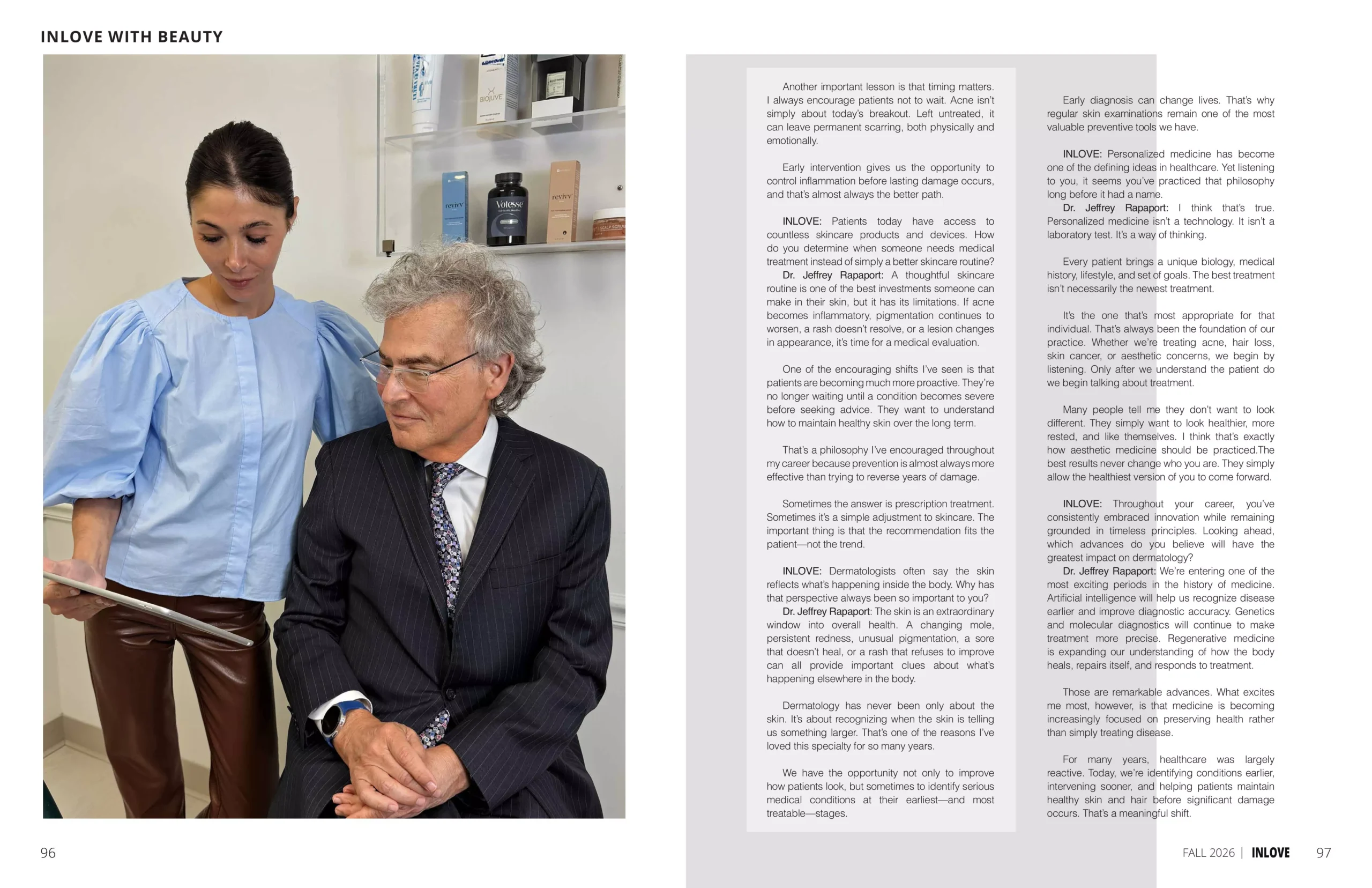
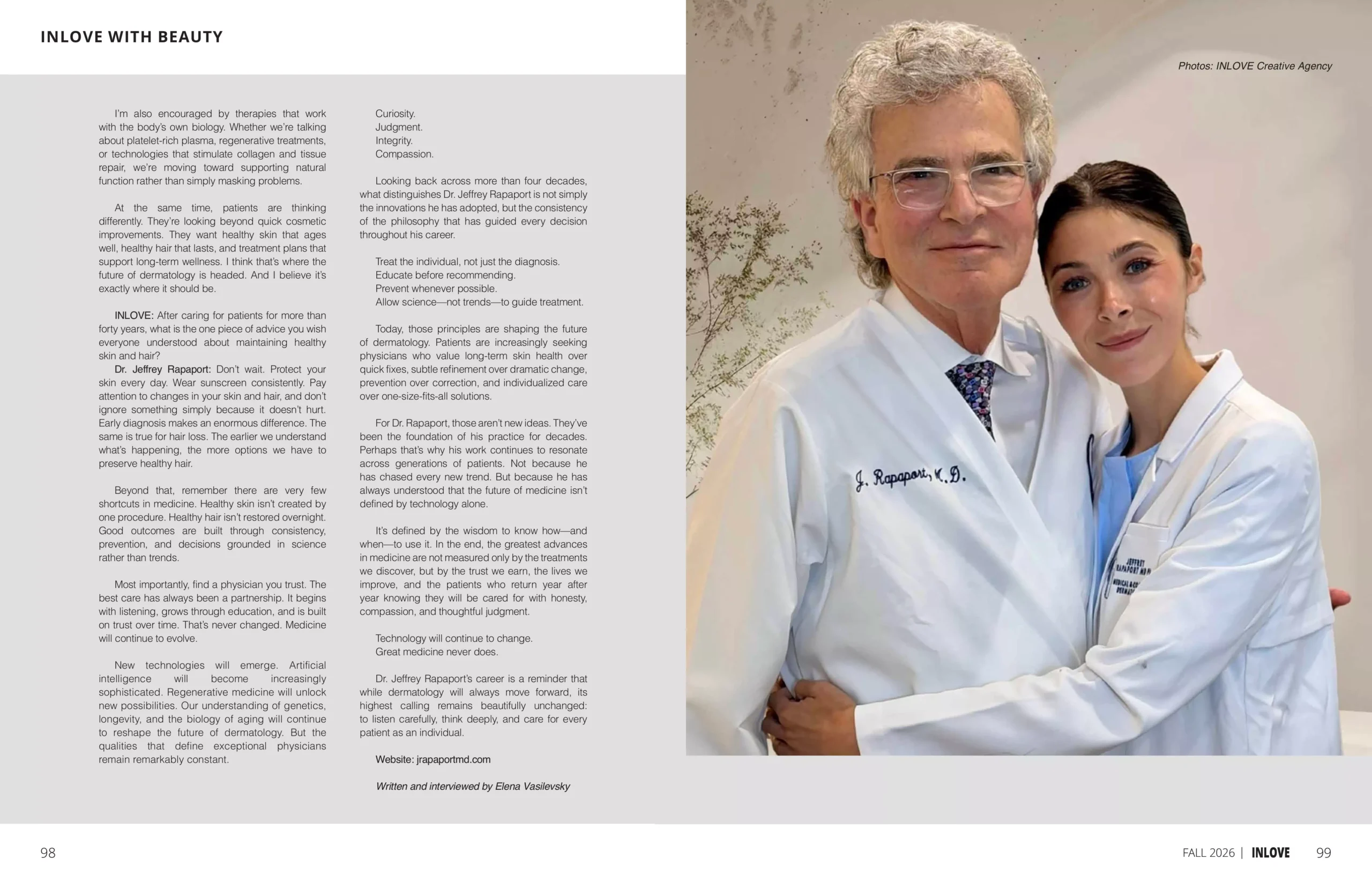
Today, that philosophy continues into the next generation. Working alongside him is his daughter, Lanna Rapaport, RN, a cosmetic nurse who shares his commitment to thoughtful, evidence-based care.
But patients don't return for two, three, four decades because of credentials alone. They return because they feel heard, because every recommendation starts with one question: What is truly best for this patient?
Experience & Credentials
Certified by the American Board of Dermatology, Dr. Rapaport is a Phi Beta Kappa recipient from Emory University and a graduate of the Emory University School of Medicine. He completed his dermatology residency at Thomas Jefferson University, where he served as chief resident.
He is Chairman Emeritus at Holy Name Hospital in Teaneck, New Jersey, and has been elected to Who’s Who in America.

Medical Education
- Emory University, Atlanta GA (Undergraduate) — 1971-1974
- Emory University School of Medicine (Graduate)
Atlanta GA; Medical Doctor — 1974-1978 - Grady Memorial Hospital, Atlanta, GA (Internship) — 1978-1979: Pathology Categorical Diversified (PGYI)
- Thomas Jefferson University Hospital (Residency):
- PGY2-3 Resident Dermatology — 1979-1981
- PGY4 Chief Resident in Dermatology — 1981-1982
Professional Practice
- Dermatology and Dermatology Surgery — July 1, 1982 to Present
Board Certifications
- American Board of Dermatology October 31, 1983
Licensure
- Licensure: Diplomate of National Board of Medical Examiners, 1979 • #199144
- Licensed to Practice Medicine in State of New Jersey, 1981 #40129
Professional Fellowship
- Fellow, American Academy of Dermatology
- Fellow, American Society for Laser Medicine and Surgery
- Fellow, American Society for Dermatologic Surgery
- Fellow, International Society for Dermatologic Surgery
- Fellow, North American Society of Phlebology
PRP Expertise & Education
Dr. Jeffrey Rapaport has been a leader in PRP Therapy for hair rejuvenation. He is the ultimate expert and one of the early adopters of the PRP procedure. He has not only treated thousands of patients but he also teaches PRP injection techniques to other doctors around the world.
Dr. Rapaport wrote a chapter in the book called “PRP and Microneedling in Aesthetic Medicine”.
If you are a patient experiencing hair loss, you owe it to yourself to seek advice from a doctor who is an expert in properly diagnosing underlying reasons for your hair loss and then devising a treatment that will work best for your condition.
Dr. Rapaport believes in using PRP monotherapy and combination treatments. Along with PRP injections, Dr. Rapaport uses special vitamins, peptides, LED light and hormonal modulation often resulting in better outcomes.
Featured in INLOVE Magazine, Fall 2026, Issue No. 35
In this INLOVE Magazine interview, Dr. Rapaport reflects on more than four decades of patient care, his approach to skin and hair health, and the importance of listening. Browse the magazine pages, then explore the conversation below.
In Dr. Rapaport's Own Words
Select a question to read Dr. Rapaport’s answer.
How has watching patients' attitudes toward aging and skin health evolve over 40+ years shaped your practice?
When I began practicing, most patients came in after a problem had already become significant, acne, hair loss, sun damage, visible aging. The focus was on correcting what had already happened.
Today, patients think further ahead. They want to preserve healthy skin and hair, prevent unnecessary damage, and make choices that pay off years down the line, which is one of the most encouraging shifts I've seen, because prevention almost always beats correction.
That's actually always been my approach. Medicine shouldn't just react to problems; it should help patients understand what's happening, anticipate change, and build a plan for the years ahead. That's what personalized medicine means to me, not offering every new technology, but choosing the right treatment for the right person at that moment in their life.
How do you decide which new technologies actually deserve a place in your practice?
Being new has never been enough. Before we bring in any technology or treatment, we ask one question: will this help our patients achieve better outcomes? If the science and clinical evidence back it up, we embrace it. If the evidence isn't there yet, we wait. Patients deserve recommendations grounded in science, not marketing, technology should support clinical judgment, never replace it.
What's changed most in how you think about treating hair loss?
Our understanding has become far more sophisticated. Every patient brings a unique mix of genetics, hormones, medical history, nutrition, inflammation, and lifestyle, so treatment has to be individualized.
What hasn't changed is my belief that the greatest opportunity in hair restoration is preservation. Patients often wait until hair loss is obvious before seeking treatment, but the earlier we identify what's happening, the greater our ability to preserve healthy follicles and slow progression. Education is a core part of every consultation, people deserve to understand not just what we're recommending, but why.
Hair loss is often labeled purely cosmetic, yet you've always spoken about its emotional weight. Why does that distinction matter to you?
Hair loss is never just about hair. For many patients, it's about confidence and identity, the way they recognize themselves in the mirror. Two people can have the same diagnosis and experience it in completely different ways, which is why listening matters as much as diagnosing. Our job isn't just to understand what's causing the hair loss, it's to understand how it's affecting the person in front of us.
With so much skincare advice now coming from social media and AI, has the dermatologist's role changed?
If anything, it's become more important. Patients have access to an extraordinary amount of information, but information isn't the same as understanding. People come in overwhelmed after reading conflicting advice online. Our role is to provide clarity: start with biology, ask what's actually driving a condition, and let the evidence guide the answer. Educated patients make the best decisions, my job is to give them the knowledge to make those decisions with confidence.
Acne is often thought of as a teenage condition, but your practice treats adults of every age. What's changed?
We now understand adult acne is often very different from adolescent acne, hormones, genetics, inflammation, medications, stress, and lifestyle can all play a role, which means treatment has to be individualized rather than formulaic.
Timing matters too. I always encourage patients not to wait: acne left untreated can leave permanent scarring, physically and emotionally. Early intervention gives us the chance to control inflammation before lasting damage sets in.
How do you know when a patient needs medical treatment versus a better skincare routine?
A thoughtful skincare routine is one of the best investments someone can make in their skin, but it has limits. If acne becomes inflammatory, pigmentation keeps worsening, a rash won't resolve, or a lesion changes, it's time for a medical evaluation.
I've seen patients become far more proactive, they're not waiting for a condition to become severe before seeking advice, which is exactly the philosophy I've encouraged throughout my career. The right recommendation fits the patient, not the trend.
Dermatologists often say skin reflects overall health. Why has that perspective mattered so much to you?
The skin is an extraordinary window into overall health. A changing mole, persistent redness, unusual pigmentation, a sore that won't heal, all of it can point to something happening elsewhere in the body. Dermatology has never been only about the skin; it's about recognizing when the skin is telling us something bigger. We have the chance not just to improve how patients look, but sometimes to catch serious conditions at their earliest, most treatable stage. That's why regular skin exams remain one of the most valuable preventive tools we have.
Personalized medicine is a defining idea in healthcare today, but it sounds like you were practicing it long before it had a name.
I think that's true. Personalized medicine isn't a technology or a lab test, it's a way of thinking. Every patient brings a unique biology, history, and set of goals, and the best treatment is the one that's right for that individual, not necessarily the newest one. We start by listening, and only after we understand the patient do we talk about treatment.
Most patients tell me they don't want to look different, they want to look healthier, more rested, more like themselves. That's exactly how aesthetic medicine should be practiced: the best results never change who you are. They simply let the healthiest version of you come forward.
Looking ahead, which advances do you think will have the biggest impact on dermatology?
We're entering one of the most exciting periods in medicine. AI will help us recognize disease earlier and improve diagnostic accuracy. Genetics and molecular diagnostics will make treatment more precise. Regenerative medicine is expanding what we understand about how the body heals and repairs itself.
What excites me most is that medicine is becoming focused on preserving health rather than just treating disease, identifying conditions earlier, intervening sooner, and helping patients maintain healthy skin and hair before real damage occurs. I'm especially encouraged by therapies that work with the body's own biology, like platelet-rich plasma and other regenerative treatments, supporting natural function rather than masking problems.
After more than 40 years of patient care, what's the one thing you wish everyone understood about maintaining healthy skin and hair?
Don't wait. Protect your skin every day, wear sunscreen consistently, and pay attention to changes, don't ignore something just because it doesn't hurt. Early diagnosis makes an enormous difference, and the same is true for hair loss: the sooner we understand what's happening, the more options we have to preserve it.
There are very few shortcuts in medicine. Healthy skin isn't created by one procedure, and healthy hair isn't restored overnight, good outcomes are built through consistency, prevention, and decisions grounded in science rather than trends. Most importantly, find a physician you trust. The best care has always been a partnership, built on listening, education, and trust over time.
A Partnership Built on Trust
Treat the individual, not just the diagnosis. Educate before recommending. Prevent whenever possible. Let science, not trends, guide treatment.
These principles have shaped Dr. Rapaport's practice for more than four decades, and they continue to guide the Cosmetic Skin & Surgery Center and Rapaport Hair Institute today. It's why patients return year after year, trusting that they'll be cared for with honesty, compassion, and thoughtful judgment, generation after generation.
To schedule your consultation with Dr. Rapaport, call 551-212-8805.