


If you’re researching hair loss solutions, you’ve likely encountered countless treatments promising thicker, fuller hair. Among the newer options gaining attention is exosome therapy—specifically, topical exosomes delivered directly to your scalp. But how do topical exosomes actually work for hair regrowth, and could they be the solution you’ve been looking for?
Let’s explore the science behind this innovative regenerative treatment and what it means for people experiencing hair thinning or hair loss.
What Are Exosomes?
Exosomes are tiny messenger proteins—think of them as microscopic communication packets that cells use to talk to each other. In the context of hair restoration, these proteins are derived from healthy donor tissue (typically placenta) and contain around 200 different growth factors, signaling molecules, and regenerative compounds.
Unlike treatments that rely on your own body’s resources, exosomes aren’t patient-dependent. This means the therapy delivers a concentrated dose of healing factors regardless of your age, health status, or the current condition of your hair follicles.
What makes exosomes particularly exciting is their purity and potency. These messenger proteins contain some of the most powerful regenerative signals found in biological medicine, all working together to activate dormant hair follicles and strengthen existing hair growth.
How Topical Exosomes Stimulate Hair Growth
When exosomes are applied topically and delivered beneath the scalp’s surface, they begin communicating with your hair follicles immediately. Here’s what happens at the cellular level:
Activating Dormant Follicles
The growth factors within exosomes wake up dormant or miniaturized hair follicles that have stopped producing healthy hair. These follicles receive signals telling them to re-enter the active growth phase.
Repairing Damaged Cells
Exosomes promote the repair and regeneration of damaged follicle cells. If your follicles have been weakened by DHT (dihydrotestosterone), inflammation, or aging, the regenerative proteins help restore their health and function.
Enhancing Blood Flow
The growth factors stimulate angiogenesis—the formation of new blood vessels—around your hair follicles. Better circulation means more oxygen and nutrients reach each follicle, creating an optimal environment for hair growth.
Extending the Growth Cycle
Healthy hair goes through cycles of growth, rest, and shedding. Exosomes help extend the anagen (growth) phase, allowing your hair to grow longer and thicker before entering the resting phase.
Calming Scalp Inflammation
Chronic inflammation in the scalp can contribute to hair loss. The anti-inflammatory properties in exosomes help calm the scalp environment, reducing one of the underlying factors that weaken follicles.
The remarkable aspect of exosome therapy is that these regenerative processes continue for several months after treatment. The exosomes remain active in your scalp tissue, delivering sustained benefits long after your initial procedure.
The Topical Exosome Treatment Process
What to Expect During Your Visit
When you choose exosome hair growth therapy at The Rapaport Hair Institute in Englewood Cliffs, the procedure is designed for maximum effectiveness with minimal discomfort.
The treatment typically takes about 30 minutes in the office. Unlike injectable treatments that may require numbing agents, advanced delivery techniques can make the process nearly painless. Dr. Rapaport utilizes a specialized channeling technique that delivers the high-concentration exosomes beneath the skin surface directly to your follicles—without needles and without anesthesia.
Dr. Jeffrey Rapaport’s Device-Assisted Delivery Approach
At The Rapaport Hair Institute, exosomes aren’t simply massaged into the scalp—they’re driven precisely into the dermal layer using advanced energy-based delivery systems: Juvasonic™ and DermaFuse™.
- Juvasonic™ combines high-frequency sonic vibration, red light, and microdermabrasion to temporarily disrupt the outer skin barrier (the stratum corneum). This creates micro-channels that allow exosomes to penetrate efficiently without needles or anesthesia.
- DermaFuse™ uses low-energy electrical currents (iontophoresis and electroporation) to transport exosomes and growth factors deeper into the scalp, ensuring uniform absorption across the treatment area.
This dual-device method delivers exosomes directly to the follicular environment—where regenerative communication takes place—enhancing their bioavailability and potency compared with topical application alone.
Why Delivery Method Matters
This delivery method is crucial because it ensures the exosomes reach the follicular level where they’re needed most. The treatment requires no downtime, meaning you can return to your normal activities immediately afterward.
By integrating Juvasonic™ and DermaFuse™, Dr. Rapaport bridges the gap between laboratory-grade exosome science and real-world patient outcomes. These proprietary delivery systems enable the exosomes’ growth factors and signaling molecules to interact with dormant follicles more effectively, amplifying regeneration while keeping the experience comfortable and downtime minimal.
When Can You Expect to See Results?
Your Hair Restoration Timeline
One of the most common questions about topical exosomes for hair restoration is: how quickly will I see results?
Most patients begin noticing improvements within three months of treatment. You might first observe that your hair shedding decreases—you’ll see less hair in your brush or shower drain. Then, you’ll likely notice your existing hair becoming thicker and stronger. Finally, new hair growth typically becomes visible, filling in areas that had become thin or sparse.
Factors That Influence Your Results
The timeline varies based on several factors: the extent of your hair loss, how long you’ve been experiencing thinning, your overall health, and whether you’re combining exosomes with other treatments like PRP therapy or dutasteride mesotherapy.
Because the exosomes continue working for months after treatment, your results will continue improving over time. Many patients find that their hair continues to get better for six months or longer after their exosome scalp therapy.
Who Benefits Most from Exosome Hair Therapy?
Exosome hair restoration can be effective for both men and women experiencing various types of hair loss. The treatment works particularly well for:
Early to Moderate Hair Loss
If you’re in the early stages of thinning, exosomes can prevent further loss while regrowing what you’ve lost. The earlier you intervene, the more follicles remain viable and responsive to treatment.
Pattern Hair Loss
Both male and female pattern baldness—caused by genetic sensitivity to DHT—respond well to exosome therapy. The growth factors counteract the follicle-shrinking effects of this hormone.
Diffuse Thinning
If you’re experiencing overall thinning rather than specific bald spots, exosomes can increase hair density throughout your scalp.
Hair Quality Concerns
Even if you haven’t lost significant hair volume, exosomes can improve the thickness, strength, and appearance of the hair you have.
Understanding Candidacy
The best candidates are those who still have functioning follicles, even if those follicles are producing thin, weak hair. If you’ve been completely bald in an area for many years, the follicles may no longer be viable. A comprehensive evaluation with an experienced hair restoration dermatologist can determine whether exosomes are right for your specific situation.

Exosomes vs. PRP: What’s the Difference?
If you’ve researched non-surgical hair restoration, you’ve probably heard about PRP (platelet-rich plasma) therapy. Both exosomes and PRP use growth factors to stimulate hair regrowth, but there are important differences.
Key Distinctions
Source: PRP uses your own blood, which is processed to concentrate your platelets and growth factors. Exosomes come from donor tissue and provide a standardized, high-potency dose of regenerative factors.
Growth Factor Content: While PRP contains beneficial growth factors from your platelets, exosomes deliver approximately 200 different growth factors—significantly more variety and concentration than what PRP typically provides.
Patient Dependency: PRP’s effectiveness depends on the quality of your blood and your body’s natural growth factor production, which can decline with age or health conditions. Exosomes deliver consistent potency regardless of your individual biology.
Comfort: PRP involves drawing blood and typically includes multiple injections into the scalp. Topical exosome delivery with advanced techniques can be more comfortable and require no blood draw.
The Power of Combining Treatments
That said, these treatments aren’t necessarily either-or options. Dr. Jeffrey Rapaport—recognized as one of the earliest adopters and a leading international authority in PRP hair restoration—has pioneered an injection technique for PRP application that’s now implemented across the nation.
With eight years of dedicated experience administering PRP treatments, thousands of patients treated, and a role as an international lecturer training physicians worldwide, Dr. Rapaport has developed and refined an evidence-based PRP injection protocol that serves as a referenced model in non-surgical hair restoration training.
Dr. Rapaport’s Pioneering Expertise
His expertise extends beyond clinical practice—he’s authored numerous publications including journal articles and book chapters contributing to the body of knowledge, served as a reviewer for multiple journals specializing in hair restoration and PRP research, and actively consulted on ongoing clinical trials.
This depth of experience allows him to determine when combining treatments yields optimal results. Many times, PRP provides your body’s personalized healing factors while exosomes deliver the concentrated regenerative boost that your follicles need.
Combining Exosomes with Other Hair Loss Treatments
The beauty of exosome scalp therapy is how well it works alongside other evidence-based treatments. A comprehensive non-surgical hair restoration approach often yields the best outcomes.
KeraFactor Treatment: In-Office Protein Therapy
This in-office treatment features proprietary proteins that support follicle health and stimulate hair growth. When combined with exosomes, you’re providing your follicles with multiple pathways to regeneration—the messenger proteins from exosomes working alongside KeraFactor’s specialized growth-promoting proteins.
REVIVV by weThrivv: At-Home Maintenance
For at-home maintenance between professional treatments, Dr. Rapaport developed REVIVV—an award-winning serum backed by over two years of research and development. Dr. Rapaport has published a study demonstrating its effectiveness in supporting hair growth.
This natural, drug-free solution works for both men and women, extending the benefits of your in-office exosome treatments with daily follicle support.
Dutasteride Mesotherapy: DHT Blocking Therapy
Administered every three months, this standalone treatment uses only dutasteride (without additional amino acids, minerals, or peptides) to block DHT production at the follicle level.
While dutasteride mesotherapy effectively mitigates hair loss and prevents further thinning, it doesn’t stimulate new growth on its own. That’s where exosomes become particularly valuable—dutasteride stops the damage while exosomes actively promote regeneration.
It’s worth noting that while dutasteride mesotherapy may have sexual and other side effects, they occur less frequently than with oral administration, which is why some patients prefer this localized approach.
PRP Therapy: Your Body’s Healing Power
As mentioned, combining your body’s own healing factors through PRP with the concentrated regenerative power of exosomes can create a comprehensive approach. Dr. Rapaport’s refined PRP protocol, developed over thousands of treatments, can work synergistically with exosome therapy for enhanced results.
Creating Your Personalized Plan
A board-certified dermatologist with expertise in non-surgical hair restoration can design a personalized treatment plan that addresses your specific type of hair loss, combines complementary therapies, and adjusts your protocol based on your progress.
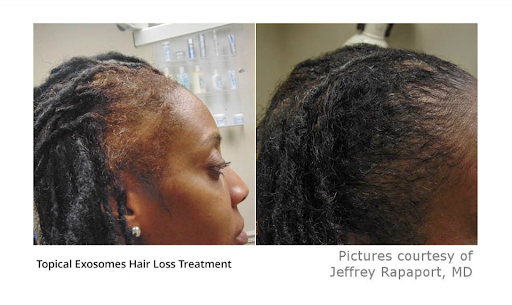
Why Choose a Hair Restoration Specialist for Exosome Therapy
Not all exosome treatments are created equal. The quality of the exosomes, the delivery technique, and the expertise of your provider all significantly impact your results.
When seeking exosome hair growth therapy, look for a provider who specializes specifically in non-surgical hair restoration—not just a general aesthetic practice offering the latest trend. A true hair restoration expert brings several critical advantages:
Microscopic Evaluation and Diagnosis
Specialized dermatologists examine your hair and scalp at the microscopic level to accurately diagnose your hair loss pattern and determine the best treatment approach.
Customized Treatment Protocols
Cookie-cutter protocols rarely deliver optimal results. An expert can customize your exosome treatment based on your unique hair loss pattern, combining it with other therapies as needed.
Medical-Grade Quality Standards
Physician-grade, high-concentration exosomes differ significantly from over-the-counter topical serums that claim to contain exosomes. Make sure you’re receiving authentic, medical-grade treatment.
Advanced Delivery Techniques
How exosomes are delivered matters enormously. Advanced techniques that place exosomes precisely at the follicular level—without unnecessary discomfort—require specialized skill and equipment.
Ongoing Monitoring and Adjustment
Hair restoration is a journey, not a single treatment. Your provider should monitor your progress, adjust your protocol, and provide long-term maintenance strategies to protect your investment.
A Recognized Leader in Regenerative Dermatology
With over 30 years of clinical experience and board certification in dermatology, Dr. Jeffrey Rapaport is among the earliest clinical adopters of exosome-based therapy for aesthetic and hair applications. He’s also a recognized innovator in PRP and regenerative treatment protocols.
Dr. Rapaport has authored and co-authored numerous peer-reviewed papers, book chapters, and lectures internationally on exosome science, including some of the first systematic reviews evaluating exosomes in dermatology and hair restoration.
His work—available here—has helped establish foundational understanding of how exosome signaling can be safely and effectively applied in clinical practice.
By combining topical and device-assisted delivery (Juvasonic™ and DermaFuse™), Dr. Rapaport translates complex cellular biology into patient-centered, reproducible protocols that set the benchmark for evidence-based regenerative dermatology.
World-Class Expertise at The Rapaport Hair Institute
Dr. Jeffrey Rapaport, a board-certified dermatologist with decades of experience in regenerative dermatology and hair restoration, stands as a renowned pioneer in non-surgical hair restoration. His early adoption of exosome-based therapy—and ongoing research contributions—have positioned him as a bridge between laboratory innovation and clinical excellence.
His precise follicle-targeted delivery methods, refined over thousands of patients, have become a referenced model in non-surgical hair restoration training worldwide. Patients travel internationally to benefit from his expertise in both established therapies like PRP and innovative treatments like exosomes, confident they’re receiving the most comprehensive, evidence-based care available.
Is Exosome Therapy Right for You?
Take the Next Step Toward Hair Restoration
If you’re experiencing hair thinning or hair loss, exosome therapy represents one of the most advanced regenerative treatments available today. With its high concentration of growth factors, minimal discomfort, and no downtime, it’s an attractive option for people seeking non-surgical hair restoration.
Schedule Your Comprehensive Evaluation
The best way to determine whether topical exosomes are right for your specific situation is through a comprehensive evaluation with a hair restoration specialist. During your consultation, you’ll receive:
- A microscopic hair analysis to assess follicle health
- A thorough discussion of your hair loss pattern and goals
- A personalized treatment plan designed to deliver the results you’re looking for
- Expert guidance on combining treatments for optimal outcomes
Contact The Rapaport Hair Institute
Ready to explore how exosome hair restoration can help you regain thicker, healthier hair? Schedule your consultation with Dr. Rapaport at The Rapaport Hair Institute in Englewood Cliffs or one of our convenient New Jersey locations:
- Englewood Cliffs: (201) 500-2425 – 333 Sylvan Ave #207, Englewood Cliffs, NJ 07632
- Old Bridge: (732) 591-1700 – 33 Hospital Plaza Suite 300, Old Bridge, NJ 08857
- Jersey City: (732) 591-1700 – 631 Grand Ave. Ste 1-200, Jersey City, NJ 07304
- Secaucus: (201) 500-2425 – 255 State Route 3 STE 206, Secaucus, NJ 07094
Discover what world-class non-surgical hair restoration expertise can do for your confidence and your hair.