


Losing weight can feel like a powerful reset. Your clothes fit differently, your energy may improve, and the commitment you made to your health finally begins showing up in visible ways. Then, just as you are starting to feel proud of your progress, something unexpected happens: your hair starts shedding.
For many patients, hair thinning after weight loss feels confusing and discouraging. You did something positive for your body, so why does your hair suddenly look thinner? Why is the shower drain fuller? Why does your part look wider? Why does your ponytail feel smaller than it did a few months ago?
The truth is that hair loss after weight loss is more common than many people realize. Rapid body changes, calorie restriction, nutritional shifts, hormonal changes, metabolic stress, surgery, medications, and major lifestyle transitions can all affect the hair growth cycle. The result may be excessive hair shedding, sudden thinning, or hair that feels weaker than before.
The encouraging news is that this does not always mean permanent hair loss. With the right evaluation and treatment plan, patients can support hair regrowth after weight loss and help follicles recover. PRP hair restoration is one of the leading non-surgical options for patients who want a regenerative approach that uses the body’s own growth factors to support healthier, stronger-looking hair.
Keep reading to understand why weight loss can affect hair, how PRP may help, and when it is time to seek professional guidance.
Why Weight Loss Can Trigger Hair Thinning
Hair growth is not separate from the rest of the body. Follicles are highly sensitive to internal changes, which means major weight loss can affect the scalp even when the weight loss itself is intentional and beneficial.
A common reason for hair loss after weight loss is a condition called telogen effluvium. This occurs when physical or emotional stress pushes more hairs than usual into the resting phase of the hair cycle. A few months later, those hairs shed at the same time. This is why patients may notice shedding several weeks or months after weight loss begins, rather than immediately.
The hair follicle is not considered essential for survival, so when the body feels stressed or under-fueled, it may redirect resources away from hair growth. That can lead to sudden hair thinning, diffuse shedding, or a noticeable change in density.

The Difference Between Shedding and True Hair Loss
Not all hair loss behaves the same way. This distinction matters because treatment depends on what is happening at the follicle level.
Shedding is often temporary and may improve once the body stabilizes. This is common with telogen effluvium after rapid weight loss, childbirth, illness, or stress. Patients may lose more hair daily, but the follicles are still alive and capable of producing new growth.
True hair loss can involve miniaturization, where follicles gradually produce thinner, weaker strands. This can happen with androgenetic alopecia, also known as genetic hair loss. Weight loss may not cause genetic hair loss, but it can reveal or accelerate its appearance.
A professional evaluation can help determine whether the concern is temporary shedding, genetic thinning, nutritional deficiency, inflammation, or a combination. That is why guessing is not ideal. Hair deserves a diagnosis, not panic-based product shopping at midnight.
What Is PRP Hair Restoration?
PRP stands for Platelet-Rich Plasma. It is a non-surgical treatment that uses components from the patient’s own blood to support natural hair restoration. A small blood sample is drawn, processed to concentrate the platelets, and then carefully injected into targeted areas of the scalp.
Platelets contain growth factors that help signal repair, circulation, and tissue regeneration. When applied to areas of thinning hair, PRP may help stimulate weakened follicles, support scalp health, and encourage healthier hair growth over time.
PRP hair restoration may be used as a stand-alone treatment or as part of a comprehensive hair restoration program. It is commonly considered for both men and women who want a restorative and preventive option for thinning hair.
A board-certified specialist or trained hair restoration provider can evaluate the scalp and design a plan based on the patient’s cause of thinning, timeline, and goals.
How PRP Helps After Weight Loss
PRP is not a quick cosmetic cover-up. It is a regenerative treatment designed to support follicle function over time. For patients whose hair has been affected by weight loss, that kind of support can be especially meaningful.
1. PRP Delivers Growth Factors to the Scalp
Hair follicles rely on signals from the surrounding tissue to remain active and healthy. When the body experiences weight loss stress, those signals may become disrupted. PRP helps by delivering concentrated platelets directly to the scalp, where growth factors can support the follicle environment.
These growth factors may encourage repair, improve cellular communication, and help follicles transition into a healthier growth cycle. This can be especially valuable for patients whose follicles are dormant or weakened but still viable.
The goal is not to force an artificial result. PRP works with the body’s natural biology, which is why improvements develop gradually and subtly.
2. PRP Supports Dormant Follicles
After significant weight loss, some follicles may enter a resting phase. This can make the hair look thinner, even if the follicles are not permanently damaged. PRP may help stimulate these underactive follicles and encourage them to re-enter the growth phase.
This is one reason timing matters. Patients who seek care early may have more opportunity to support follicles before thinning becomes more advanced. If the hair loss is mostly shedding-related, treatment may help the scalp recover more efficiently while the body stabilizes.
Patients should understand that hair growth takes time. New growth may take months to become visible because hair grows in cycles. Consistency is key.
3. PRP Helps Improve Scalp Circulation
Healthy hair growth depends on blood flow. Follicles need oxygen and nutrients to produce strong strands. When the body is under stress, circulation and nutrient delivery to the scalp may be affected.
PRP may help support a healthier scalp environment by encouraging vascular and tissue repair signals. Better scalp support can improve the conditions follicles need for stronger growth.
This does not replace nutrition, hydration, or medical management. Instead, PRP works alongside those essentials as part of a complete hair restoration treatment plan.
4. PRP Can Improve Hair Thickness and Quality
Patients often focus on how many hairs they are losing, but strand quality matters too. After weight loss, hair may feel finer, weaker, or less resilient. It may break more easily or lack the density it once had.
PRP can help support thicker, stronger-looking hair by improving follicle activity. Over time, patients may notice that shedding slows, hair feels healthier, and density begins to look more stable.
This is not an overnight transformation. PRP results are cumulative. Most patients need a series of sessions, followed by maintenance treatments depending on their condition and goals.
5. PRP Is Non-Surgical
Many patients dealing with post-weight-loss shedding do not need surgery. They need diagnosis, scalp support, nutritional review, and regenerative care. PRP offers a non-surgical path that does not involve incisions, donor harvesting, or transplant recovery.
This makes it especially appealing for patients who are still actively stabilizing after weight loss. It can be incorporated into a broader treatment plan while the body adjusts.
For patients who want a natural-looking option that supports existing follicles, PRP is often a strong first step.
6. PRP Works for Men and Women
Hair thinning after weight loss can affect all genders. Women may notice diffuse shedding, a widening part, or thinner ponytails. Men may notice crown thinning, temple recession, or reduced density in areas already prone to genetic loss.
PRP can be customized based on the patient’s thinning pattern. The treatment areas, number of sessions, and maintenance plan may vary depending on whether the hair loss is temporary, genetic, or mixed.
A personalized approach matters because the same treatment plan does not fit every scalp.
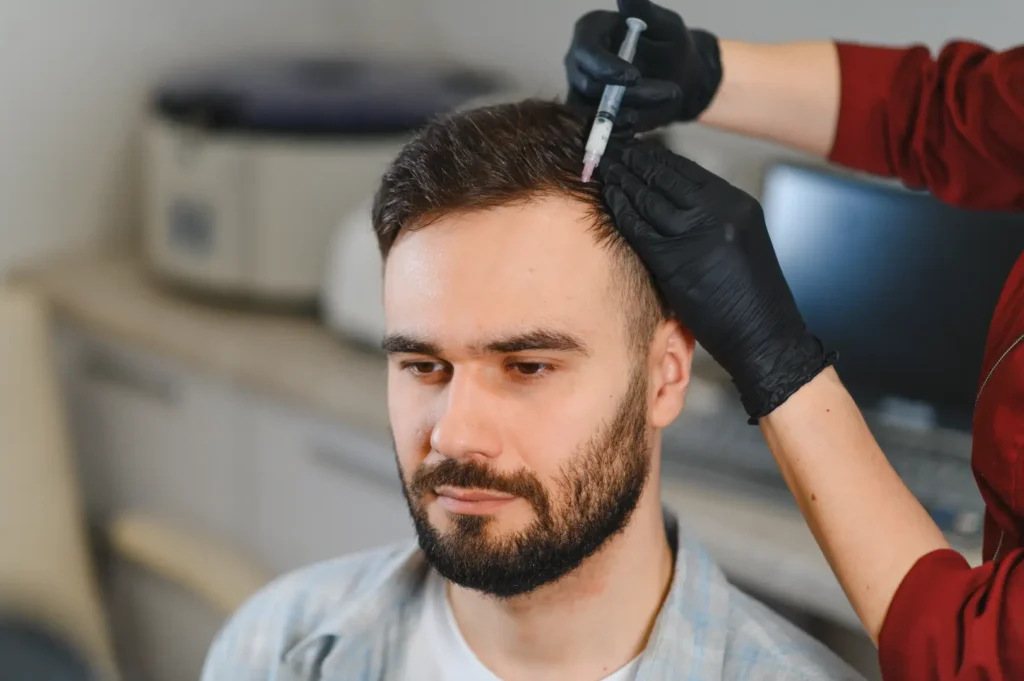
7. PRP Can Be Paired With Other Hair Support
Post-weight-loss hair recovery often requires more than one strategy. PRP may be paired with nutritional guidance, supplements, topical therapies, scalp care, or other in-office treatments when appropriate.
If deficiencies are present, they need to be addressed. If thyroid changes, anemia, hormone imbalance, or medication side effects are contributing, those factors should be evaluated. PRP is powerful, but it works best when the underlying triggers are also managed.
This is why a complete consultation is so important. Hair restoration is most effective when it treats the reason for thinning, not just the visible result.
8. PRP Helps Patients Feel Proactive
Hair thinning can feel emotionally heavy, especially after weight loss. Patients may feel like they solved one health concern only to gain another. PRP gives patients a way to take action with a treatment that supports natural repair.
That sense of control matters. When patients understand what is happening and have a plan, the experience becomes less frightening. They can track progress, support the scalp, and move forward with confidence instead of waiting anxiously for shedding to stop. Hair restoration is not only physical. It is personal.
Exosomes for Hair Growth
Exosomes are an advanced hair restoration treatment that may help support healthier hair growth by improving the scalp environment and stimulating hair follicles. They can be used alongside proper nutrition and other treatments to support recovery and improve overall hair health.
A Refined Path Back to Fuller Hair
Hair thinning after weight loss can be unsettling, but it is not something patients have to navigate alone. When the body undergoes major change, the hair can respond with shedding, thinning, or temporary loss of density. With proper evaluation and a personalized plan, many patients can support healthier regrowth and restore confidence.
At Rapaport Hair Institute in New Jersey, patients can explore PRP and other advanced hair restoration options designed to address thinning with precision and care.
Your weight loss journey should feel like a celebration of your health, not the beginning of a new insecurity. With PRP hair restoration and thoughtful guidance, fuller-looking hair may become part of the next chapter.
Connect with us today to schedule your appointment!