

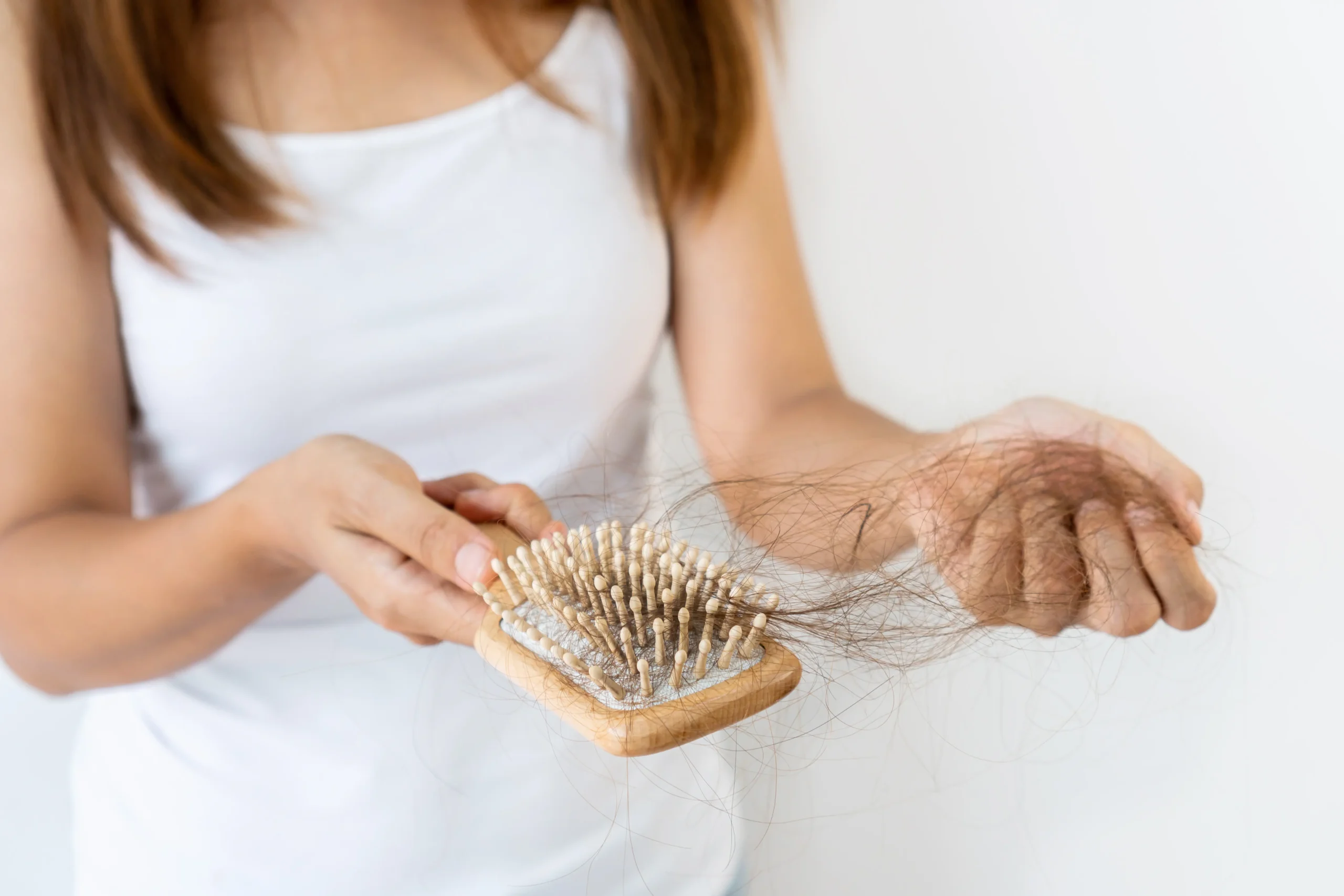
Healthy hair begins long before you notice it in the mirror. Every strand depends on a steady supply of nutrients to complete its natural growth cycle, which is why changes in your overall health often appear in your hair before you recognize them elsewhere.
If you’ve recently noticed increased shedding, slower growth, or thinning throughout your scalp, your body may be signaling that something deeper deserves attention. Hair loss can develop for many reasons, including genetics, hormonal changes, stress, medical conditions, and aging. However, nutrition is another important piece of the puzzle that is sometimes overlooked.
Hair follicles are among the most metabolically active structures in the body, meaning they rely on vitamins, minerals, and proteins to function properly. When essential nutrients become depleted, the hair growth cycle can become disrupted, resulting in noticeable shedding or weaker strands over time. This is why a comprehensive hair loss treatment plan often extends beyond topical products or in-office procedures.
Understanding your nutritional health allows your provider to identify correctable deficiencies that may be contributing to hair thinning. If you’ve been wondering whether your diet or nutrient levels could be affecting your hair, continue reading to learn how iron, ferritin, zinc, biotin, and other nutrients influence healthy hair growth.
What Is a Nutrient Deficiency?
Healthy hair depends on more than shampoo and conditioner. A nutrient deficiency occurs when the body does not receive, or cannot properly absorb, enough of a vitamin, mineral, or other essential nutrient required for normal biological function. Because hair follicles continuously cycle through growth, transition, and resting phases, they require a consistent supply of nutrients to produce healthy hair.
When nutrient levels become too low, the body naturally prioritizes vital organs over hair growth. As a result, hair follicles may enter the resting phase earlier than expected, contributing to increased shedding or slower regrowth.
Several factors may contribute to nutrient deficiencies, including:
- Poor dietary intake
- Restrictive diets
- Gastrointestinal disorders affecting absorption
- Heavy menstrual bleeding
- Pregnancy and postpartum changes
- Certain medications
- Chronic illness
- Significant weight loss
- Bariatric surgery
Because many nutrient deficiencies produce symptoms similar to other causes of hair loss, laboratory evaluation often becomes an important part of diagnosis. Rather than guessing which supplement you may need, testing allows treatment recommendations to be based on objective findings.

How Nutritional Deficiencies Influence Hair Growth
Hair follicles depend on a delicate balance of nutrients to remain healthy. When one or more of these nutrients becomes depleted, the effects often extend beyond hair thickness alone. Understanding each nutrient’s role helps explain why identifying deficiencies can become an important step in successful hair restoration.
1. Iron Supports Growing Hair
Iron plays a critical role in transporting oxygen throughout the body. Because hair follicles are highly active tissues, they require adequate oxygen delivery to maintain healthy growth. When iron levels become too low, follicles may receive less support than they need, contributing to increased shedding.
Many patients experiencing iron deficiency hair shedding first notice:
- More hair in the shower
- Increased hair on brushes
- Diffuse thinning across the scalp
- Reduced hair density
- Slower regrowth after shedding
Iron deficiency is particularly common among women with heavy menstrual cycles, pregnancy, restrictive diets, or certain gastrointestinal conditions. Fortunately, identifying iron deficiency early often allows providers to recommend dietary changes or supplementation when medically appropriate.
2. Ferritin Reflects Your Iron Stores
Iron and ferritin are closely related, but they are not identical. Ferritin is a protein that stores iron within the body. Even when iron levels appear relatively normal, ferritin stores may already be depleted. For this reason, providers evaluating hair loss frequently include ferritin testing as part of a comprehensive assessment.
Low ferritin has been associated with certain forms of diffuse hair shedding, making ferritin hair loss in NJ an important discussion for patients seeking answers about unexplained thinning. Rather than relying on symptoms alone, laboratory testing helps determine whether low ferritin could be contributing to changes in the hair growth cycle.
3. Zinc Supports Healthy Follicle Function
Zinc is another essential mineral involved in many cellular processes throughout the body. Hair follicles depend on zinc for healthy tissue repair, protein synthesis, and normal follicle function. When zinc levels become inadequate, some patients may experience:
- Increased shedding
- Slower hair growth
- Brittle hair
- Changes in hair texture
Because zinc participates in multiple biological pathways, correcting a deficiency may become one component of a personalized zinc hair loss treatment in NJ plan when laboratory findings support supplementation. As with any nutrient, excessive supplementation without medical guidance should be avoided, since too much zinc can interfere with the absorption of other important minerals.
4. Biotin Helps Maintain Healthy Hair
Biotin has become one of the most widely recognized nutrients associated with hair health. As a B vitamin, biotin contributes to normal metabolism and supports the production of keratin, one of the primary structural proteins found in hair.
True biotin deficiency is relatively uncommon in healthy individuals eating balanced diets. However, when deficiency does occur, it may contribute to brittle hair, thinning, and changes in skin or nails.
Patients frequently ask about biotin hair thinning in NJ, but it’s important to remember that supplementation benefits those who are actually deficient. Taking large amounts of biotin without confirmed deficiency has not consistently been shown to improve hair growth in otherwise healthy individuals.
A thorough evaluation helps determine whether biotin supplementation is appropriate or whether another underlying issue may be responsible for hair thinning.
5. Vitamin D Deserves Attention Too
Although this article focuses primarily on iron, ferritin, zinc, and biotin, vitamin D is another nutrient commonly evaluated during hair loss assessments. Researchers continue studying the relationship between vitamin D hair loss, and while the exact connection remains under investigation, low vitamin D levels have been observed in some patients experiencing certain forms of hair thinning.
Vitamin D contributes to many functions throughout the body, including immune regulation and normal cell growth. When clinically appropriate, correcting deficiency may become part of a broader treatment strategy developed by your healthcare provider.
6. Blood Work Helps Find the Real Cause
Hair loss is a symptom, not a diagnosis. Because so many different conditions can contribute to thinning hair, treating the problem without understanding its cause may delay meaningful improvement.
This is why many specialists recommend comprehensive hair loss blood work in NJ before developing a treatment plan. Laboratory testing allows your provider to evaluate nutritional status while also screening for other conditions that may affect hair growth, such as thyroid disorders, hormonal imbalances, inflammation, or anemia.
Depending on your symptoms and medical history, testing may include:
- Complete blood count (CBC)
- Iron studies
- Ferritin
- Zinc
- Vitamin D
- Vitamin B12
- Thyroid function tests
- Hormone evaluation when appropriate
Instead of guessing which supplement you may need, blood work provides objective information that guides personalized treatment recommendations.

Build a Stronger Foundation for Hair Growth at Rapaport Hair Institute
Healthy hair begins from within, and nutrition plays a vital role in supporting every stage of the hair growth cycle. While deficiencies in iron, ferritin, zinc, biotin, or vitamin D don’t account for every case of hair loss, identifying and correcting these imbalances can become an important part of a comprehensive hair loss treatment plan.
At Rapaport Hair Institute in New Jersey, every patient’s journey begins with understanding the underlying cause of hair thinning. Through comprehensive evaluations, personalized treatment plans, and evidence-based care, the team helps patients address nutritional concerns alongside advanced hair restoration therapies to support healthier, stronger hair over the long term.
Contact us today to book your appointment!