


Hair growth is rarely about one product, one treatment, or one magic ingredient. For many patients, thinning hair develops gradually. The part looks wider. The ponytail feels smaller. The hairline begins to look less dense in photos.
At first, it may be easy to blame stress, aging, styling habits, or seasonal shedding. But when hair loss becomes more noticeable, patients often begin searching for answers that go beyond ordinary shampoos and supplements.
That is where topical copper peptides deserve more attention. While many patients are familiar with PRP, prescription topicals, supplements, and in-office hair restoration treatments, copper peptides are often overlooked as part of a complete hair growth plan.
These small but powerful molecules may support scalp health, encourage a healthier follicle environment, and complement professional treatments designed to improve density and resilience. Used consistently, topical copper peptides can become an important part of at-home maintenance between hair restoration visits.
Keep reading to understand what copper peptides are, how they may support hair growth, and why they can be especially valuable when paired with in-office therapies.
What Are Copper Peptides?
Copper peptides are small protein fragments bound to copper, a trace mineral that plays an important role in many biological functions. One of the most studied forms is GHK-Cu, a naturally occurring copper peptide found in the body.
In skincare and haircare, copper peptides are often used for their regenerative support. They are valued for their role in tissue repair, collagen support, antioxidant activity, and cellular signaling. When used on the scalp, topical copper peptides may help create a healthier environment for hair follicles.
At our practice, we offer our exclusive Dr. Rapaport Copper Peptides Spray, formulated with over 2% copper peptides to provide advanced topical support for scalp health and hair restoration. It is designed to complement in-office treatments by helping nourish the scalp and support an optimal environment for healthier-looking hair.
Copper peptides are not a replacement for medical evaluation or advanced hair restoration procedures. Instead, they serve as a supportive topical therapy, especially for patients following a comprehensive hair restoration plan.
The Scalp Matters
Before discussing hair growth, it helps to remember that healthy hair begins with the scalp. Many patients focus only on the visible strand, but the follicle beneath the surface is where growth begins. If the scalp environment is stressed, inflamed, poorly nourished, or affected by aging, follicles may not function at their best.
This is why modern hair restoration often combines topical support with in-office treatments. The goal is not only to stimulate growth but also to support the environment where growth happens.
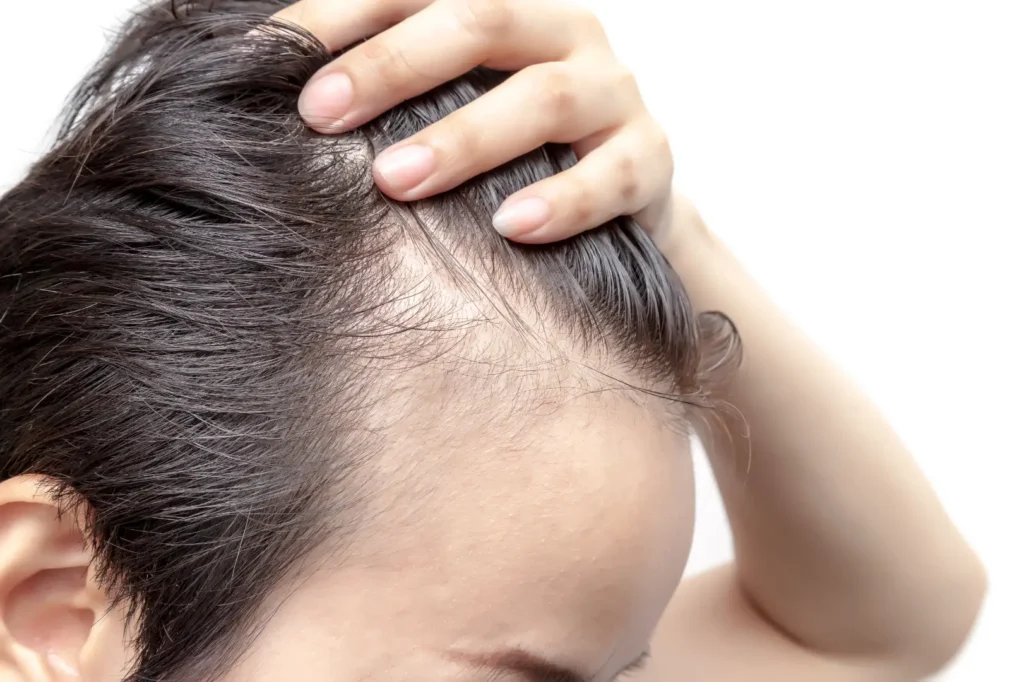
1. Copper Peptides May Support Follicle Stimulation and Help Reduce DHT Activity
While hair loss is influenced by genetics, hormones, inflammation, stress, nutrition, and aging, topical copper peptides may help create a healthier environment for follicles to function. They may also help reduce DHT activity in the scalp, supporting healthier hair growth when used consistently as part of a provider-guided plan.
2. They Help Improve Scalp Health
The scalp is skin, and it needs care. Oil buildup, dryness, inflammation, environmental stress, and product residue can all affect how comfortable and healthy the scalp feels. A stressed scalp may contribute to itching, flaking, sensitivity, or a less ideal environment for growth.
Topical copper peptides may support the scalp by helping calm visible signs of stress and encouraging healthier tissue function. This does not mean they cure scalp conditions, but they may play a supportive role in improving the overall quality of the scalp environment.
Patients often underestimate this step. They invest in growth treatments but neglect the skin that supports the follicle. A healthier scalp can make the rest of the hair restoration plan more complete.
3. They May Support Stronger-Looking Hair
Hair thinning is not only about the number of strands. It is also about the quality of each strand. When hair becomes weaker, finer, or more fragile, density can look reduced even if shedding is not dramatic. Copper peptides may help support the appearance of stronger, healthier-looking hair by contributing to scalp and follicle wellness.
Over time, patients may notice hair that feels less brittle and more resilient. This is especially important for patients who style their hair frequently, use heat tools, color their hair, or have experienced stress-related shedding. Healthy-looking hair begins before the strand emerges.
4. They Can Complement PRP Hair Therapy
PRP, or platelet-rich plasma, is a popular in-office treatment that uses concentrated growth factors from the patient’s own blood to support hair restoration. It is often recommended for thinning hair, early density loss, and weakened follicles.
Copper peptides combined with PRP hair treatment may offer a strong supportive strategy because each works in a different way. PRP provides concentrated growth factors during in-office sessions, while topical copper peptides may help maintain scalp support between appointments.
This type of combination approach reflects a bigger principle in hair restoration: in-office treatment can create momentum, but home care helps support the process between visits. For many patients, the best results come from layering therapies intelligently rather than relying on one solution alone.
5. They May Pair Well With Kerafactor
Kerafactor is another hair and scalp treatment option used to support follicle health and improve the appearance of thinning hair. Patients interested in copper peptides and Kerafactor together may be seeking a more complete plan that includes both professional treatment and topical support.
When thoughtfully combined, treatments like Kerafactor and topical copper peptides can help support the scalp from multiple angles. One may provide professional-grade in-office support, while the other helps patients stay consistent with at-home maintenance.
The goal is not to overwhelm the scalp with too many products. The goal is to build a plan that makes sense for the patient’s hair loss pattern, scalp condition, and long-term goals.
6. They Support At-Home Maintenance Between Visits
Hair restoration is not built only in the treatment room. What patients do between visits matters. That is why at-home maintenance between hair treatments in NJ can be such an important part of a long-term plan. Topical copper peptides may fit into this maintenance phase because they are easy to use consistently and can support the scalp between in-office appointments.
Think of it like skincare. A professional facial or laser treatment can improve the skin, but daily home care helps protect and extend the result. Hair restoration works in a similar way. A patient may receive PRP, Kerafactor, or other in-office therapies, but scalp care at home helps keep the treatment plan active between sessions.
7. They May Help Address Oxidative Stress
Oxidative stress can affect many tissues in the body, including the scalp. Factors like pollution, inflammation, UV exposure, poor sleep, stress, and aging can contribute to oxidative stress. Over time, this may influence skin and follicle health.
Copper peptides are often valued for antioxidant-related support. By helping defend against stressors that may affect the scalp environment, they can play a role in a broader hair wellness strategy. This is not about promising overnight regrowth. It is about supporting the foundation that healthier hair depends on.
8. They Can Be Part of Early Intervention
One of the biggest mistakes patients make with hair loss is waiting too long. Hair thinning is often easier to support when addressed early. Once follicles miniaturize significantly or areas become fully bald, treatment options may become more limited.
Topical copper peptides can be a thoughtful addition for patients noticing early changes such as:
- Increased shedding
- Decreased density
- Finer strands
- More visible scalp
- Weaker hair texture
- Early widening of the part\
A copper peptide protocol for hair restoration in NJ may be most valuable when used as part of early intervention or maintenance, especially alongside professional evaluation.\

A Smarter Hair Growth Plan
Hair restoration is most effective when it addresses the scalp, the follicle, and the patient’s long-term maintenance routine. Topical copper peptides may not be the loudest treatment in the room, but they can offer meaningful support for patients who want to strengthen their hair growth plan from home.
At Rapaport Hair Institute, patients can explore professional guidance around advanced hair restoration strategies, including PRP, Kerafactor, and supportive topical care. Whether you are interested in copper peptides combined with PRP hair treatment, a copper peptide scalp serum in New Jersey, or a broader plan for combining topical and in-office hair treatments, expert evaluation can help determine the right path.
Hair growth does not happen in one appointment. It happens through a thoughtful plan, consistent care, and the right support at every stage. Topical copper peptides may be one of the most overlooked ways to help that process along.
Call us today to schedule your consultation!