


Hair can change quietly for months, but alopecia areata often announces itself differently. A small, smooth patch may suddenly appear on the scalp. Another may follow. For some patients, this patchy hair loss feels especially unsettling because it can develop even when the hair previously seemed healthy.
Alopecia areata is more than a cosmetic concern. It involves an immune response that disrupts normal follicle activity. The encouraging part is that the follicles may remain capable of producing hair, which makes proper evaluation and treatment important. Today, options may range from established medical therapies to regenerative approaches that support the follicular environment.
If you have noticed unexplained shedding or bald patches, understanding what may be happening is a powerful first move. Keep reading to learn about common alopecia causes, possible triggers, and the treatment approaches that may help support regrowth.
What Is Alopecia Areata?
Understanding the condition starts with recognizing what is happening beneath the visible hair loss. Alopecia is a broad term for hair loss, while alopecia areata refers to an autoimmune form of hair loss. With this condition, the immune system mistakenly targets hair follicles. That inflammatory activity can interrupt normal growth and cause hair to shed, often in clearly defined areas.
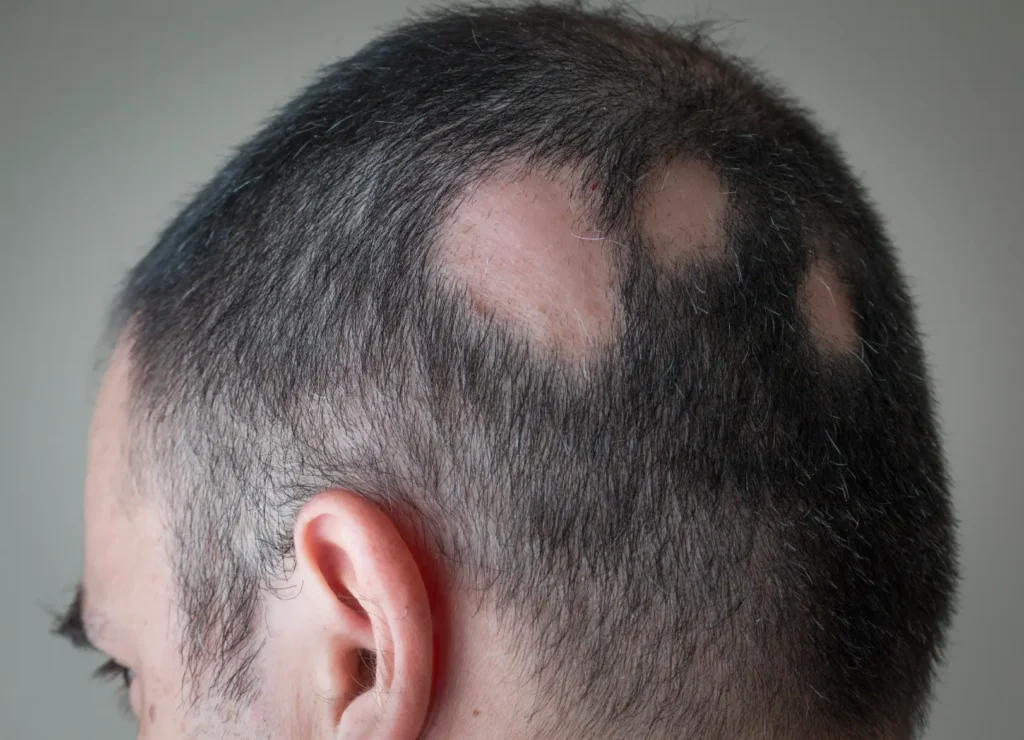
The classic presentation involves one or more round bald patches on the scalp. These areas may appear relatively smooth rather than scarred or severely inflamed. However, the condition does not look identical in every patient. Some experience a single isolated patch. Others develop multiple areas of hair loss or more extensive thinning.
Unlike forms of hair loss caused by permanent destruction of the follicle, alopecia areata is generally considered a nonscarring form of hair loss. The follicle may remain present beneath the skin even when it temporarily stops producing visible hair. This distinction helps explain why regrowth can occur.
Common signs associated with alopecia areata can include:
- Sudden circular or oval areas of hair loss
- Smooth patches of exposed scalp
- New patches developing over time
- Short or broken hairs near affected areas
- Hair regrowth followed by another episode of shedding
- Hair loss affecting areas beyond the scalp in some patients
Because many conditions can cause thinning or shedding, seeing a hair loss specialist in NJ can help distinguish alopecia areata from other types of hair loss. An accurate diagnosis also gives patients a clearer idea of which treatment strategies may be appropriate.
What Can Trigger Alopecia Areata?
There is rarely one simple explanation for why alopecia areata begins. Instead, several biological and environmental influences may contribute to the immune response that affects the follicles.
1. An Autoimmune Response
The defining mechanism behind alopecia areata is abnormal immune activity. The immune system normally protects the body from harmful organisms and other threats. With autoimmune hair loss, that protective system mistakenly identifies structures around healthy hair follicles as targets.
Immune cells gather around the follicle and create inflammation. This can interfere with the follicle’s ability to remain in its active growth stage. Hair may then stop growing and shed. Importantly, the follicle itself is not necessarily destroyed. This creates the possibility that growth can restart when inflammatory activity decreases and the follicular environment becomes more supportive.
That is why treatment often goes beyond simply trying to make existing hair appear thicker. Effective management may focus on controlling inappropriate immune activity, supporting the follicle, or combining approaches based on the patient’s individual condition.
2. Genetic Susceptibility
Alopecia areata can have a genetic component, although having a family member with the condition does not mean someone will inevitably develop it. Rather, certain patients may inherit a greater susceptibility to abnormal immune responses.
Researchers have identified associations between alopecia areata and genes involved in immune regulation. A family history of alopecia areata or other autoimmune disorders may therefore be relevant during an evaluation.
Genetics alone, however, does not completely explain when or why hair loss begins. Two people with similar genetic susceptibility can have very different experiences. One may never develop noticeable hair loss, while another may experience recurring episodes.
This is one reason physicians consider the patient’s broader history rather than looking for one isolated cause.
3. Physical or Emotional Stress
Stress is frequently discussed when patients ask about alopecia causes, but the relationship deserves some nuance. Emotional stress does not automatically cause alopecia areata, and patients should not assume that feeling stressed is solely responsible for their hair loss.
However, significant physical or emotional stress may influence immune activity in susceptible individuals. Some patients notice their first episode or a recurrence around periods of illness, major life changes, disrupted sleep, or prolonged psychological strain.
Hair itself is also sensitive to physiological changes. Other stress-related shedding conditions can occur alongside or be mistaken for alopecia areata. This overlap makes professional diagnosis particularly valuable.
Rather than blaming stress for every new patch, a careful assessment can help determine whether the pattern is consistent with alopecia areata or another form of hair loss.
4. Other Autoimmune Conditions
Patients with alopecia areata may have a greater likelihood of experiencing other immune-mediated conditions. This does not mean another autoimmune disease is always present. It does mean that a patient’s medical history can offer useful context.
The connection makes sense when we consider the underlying biology. If immune regulation is altered in one part of the body, related autoimmune tendencies may sometimes appear elsewhere.
For this reason, evaluation may include questions about personal and family medical history. Depending on the patient’s presentation, additional medical investigation may also be appropriate.
Identifying related health factors can help create a more thoughtful approach to alopecia areata treatment rather than treating the visible patch in isolation.
5. Illness and Changes in the Body
The immune system is constantly responding to changes within the body. In susceptible patients, illnesses or other significant physiological events may coincide with changes in hair growth.
This does not mean every infection or health change directly triggers alopecia areata. The relationship can be complicated, and timing alone does not establish a cause. Nevertheless, understanding what happened before the onset of hair loss can provide useful clinical clues.
A detailed history may consider when shedding began, how quickly patches appeared, whether hair loss has happened before, and whether other symptoms developed around the same period.
That timeline can help distinguish alopecia areata from other conditions that cause diffuse shedding rather than sharply defined patches.
6. Recurring Immune Activity
One of the frustrating aspects of alopecia areata is its unpredictability. Hair may regrow and remain stable, or another episode may develop later. Some patients experience only one episode, while others notice recurring patches over time.
A recurrence does not necessarily mean a previous treatment failed. It may reflect renewed immune activity around different follicles. This is also why early attention to new patchy hair loss can be helpful.
Smaller areas may be easier to evaluate, document, and monitor. Modern imaging can also provide information about thinning zones and follicular changes that may not be obvious from appearance alone.
Treatment Options for Alopecia Areata
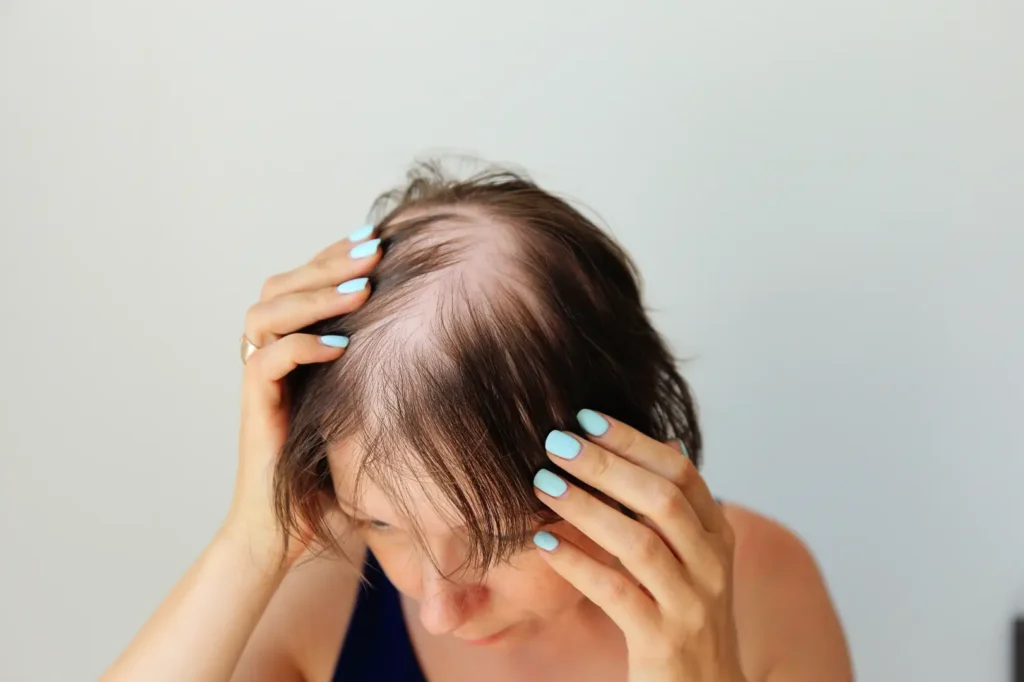
Treatment is not identical for every patient, because the extent, activity, and history of alopecia can vary considerably. A thoughtful plan considers both the immune component of the condition and the health of the affected follicles.
PRP Supports the Follicular Environment
Platelet-rich plasma, or PRP, is a regenerative approach used to support hair follicles. A concentrated portion of the patient’s own blood is prepared to provide platelets and growth factors, then delivered into targeted areas of the scalp.
For alopecia areata, PRP may be used to help create a healthier environment around dormant follicles. Growth factors can support follicular activity and may help prolong the anagen, or active growth, phase. The goal is not simply to cover an empty area. It is to encourage biological conditions that are more favorable for growth.
Treatment can also be precisely directed toward thinning areas. At Rapaport Hair Institute, the Rapid PRP Protocol uses monthly sessions with ultra-purified plasma for patients with active alopecia areata. HairMetrix imaging can help identify the depth and density of affected scalp zones so therapy can be delivered strategically.
Patients should remember that hair growth takes time. When PRP is appropriate, improvement may become noticeable after a series of treatments rather than immediately after the first session.
Corticosteroids May Calm Local Inflammation
Intralesional corticosteroid injections are a conventional dermatologic treatment for smaller areas of alopecia areata. Their primary purpose is to suppress the local immune response affecting the follicle.
By reducing inflammation, corticosteroids may give follicles an opportunity to resume normal activity. They are commonly considered when alopecia is limited to defined patches.
There are limitations, however. Repeated injections may contribute to thinning of the skin in treated areas, and this approach may not be practical when hair loss covers larger portions of the scalp.
The benefits and limitations should therefore be considered within the context of the individual patient’s pattern of hair loss.
JAK Inhibitors Target the Immune Response
JAK inhibitors are prescription medicines that reduce the immune attack on hair follicles. They may help patients with severe alopecia areata regrow hair on the scalp, eyebrows, and eyelashes. Results develop gradually, and treatment isn’t a cure.
Your dermatologist reviews your health history and orders appropriate tests before prescribing treatment. Because these medicines can cause serious side effects, regular follow-ups help monitor your response and determine whether treatment should continue.
Give Your Hair a More Informed Path Forward
Living with unexplained alopecia can leave patients wondering what triggered the change and whether their hair can return. The answer begins with identifying the type of hair loss, understanding the immune and follicular factors involved, and selecting treatment based on those findings rather than guesswork.
Rapaport Hair Institute takes a personalized, nonsurgical approach to hair restoration, including regenerative strategies for appropriate patients with alopecia areata. If new patches, persistent thinning, or recurring hair loss are changing the way you feel about your hair, a professional evaluation can provide clarity and a treatment plan built around what your follicles actually need.