

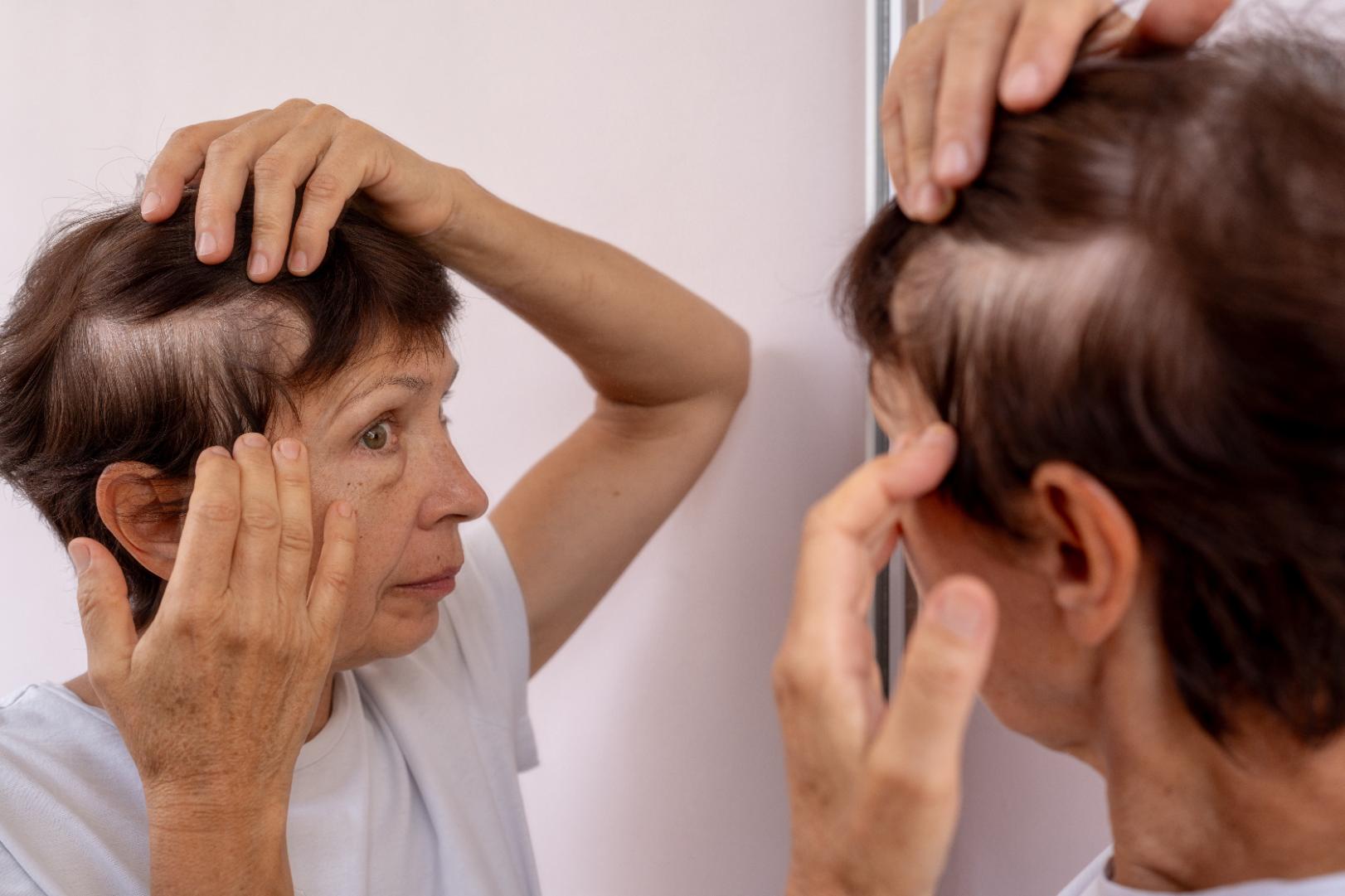
There comes a time when the changes you notice in the mirror go beyond a few fine lines or changes in your skin. Perhaps your ponytail feels noticeably smaller, your part looks wider, or your favorite hairstyle no longer has the volume it once did. For many women, hair thinning becomes an unexpected part of navigating perimenopause and menopause.
Fortunately, these changes don’t always mean you have to accept progressively thinner hair. Understanding the hormonal and biological factors behind shedding can help you explore appropriate treatments, including topical medications and platelet-rich plasma (PRP) therapy. The right approach depends on what’s causing your hair to change.
Whether you’re noticing your first signs of thinning or have been dealing with reduced volume for years, knowing what happens beneath the scalp can make a meaningful difference. Continue reading to discover why menopause affects hair growth, which symptoms deserve attention, and what may help restore healthier-looking fullness.
7 Things to Know About Menopause and Thinning Hair
Your hair responds to more than the products you apply or the way you style it. Hormonal changes, genetics, nutritional health, and the natural aging process can all influence how well your follicles produce new strands.
1. Estrogen Changes Affect Hair Growth
Estrogen does more than regulate your reproductive system. It also influences the hair growth cycle, which helps explain why some women notice changes in hair density as they approach menopause.
Each hair follicle moves through several stages, including active growth, transition, rest, and shedding. Estrogen appears to support the growth phase, although the relationship between reproductive hormones and scalp hair is complex.
During perimenopause, estrogen levels fluctuate before declining more consistently after menopause. These changes may contribute to shorter growth cycles or make existing hair thinning more noticeable.
However, menopause doesn’t automatically cause significant hair loss in every woman. Genetics, age, medical conditions, and other factors can influence whether hormonal changes lead to visible thinning.
This is why hormonal hair thinning deserves an individualized assessment. Understanding how your follicles are responding can help determine whether your symptoms are related to menopause or another underlying condition.
2. Androgens May Become More Influential
Although estrogen receives much of the attention during menopause, other hormones also play important roles in hair health. Androgens, including testosterone and dihydrotestosterone (DHT), can influence follicle activity in genetically susceptible women.
As estrogen levels decline, the relative influence of androgens may become more noticeable. This doesn’t necessarily mean your testosterone levels are unusually high, but certain follicles may be sensitive to androgen activity.
In female pattern hair loss, susceptible follicles gradually become smaller through a process called miniaturization. Over time, they produce finer, shorter strands that provide less coverage across the scalp.
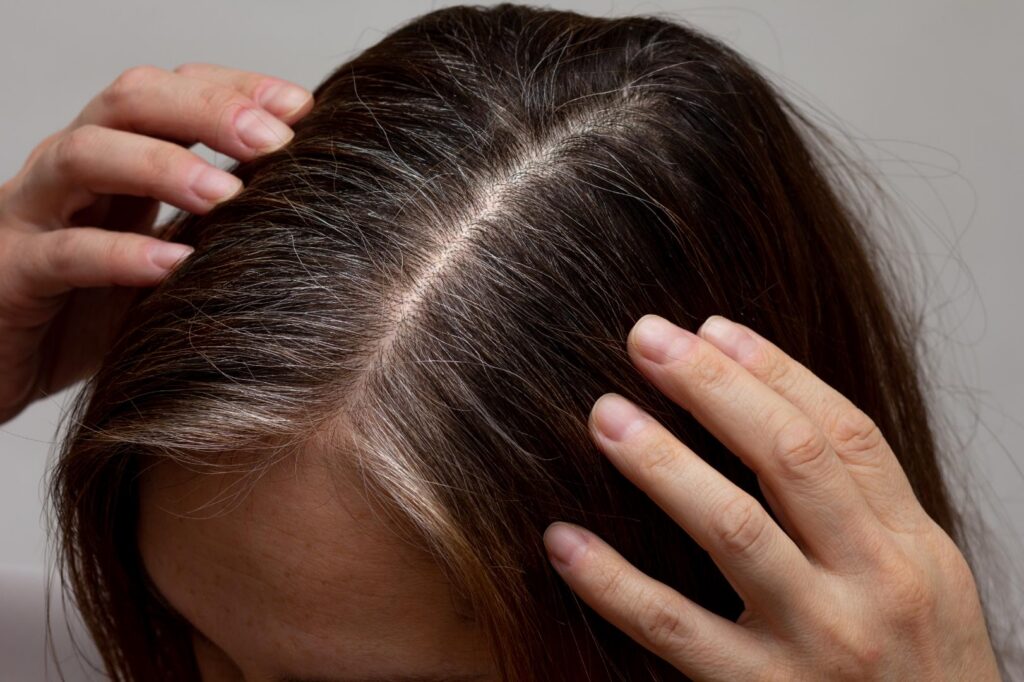
This process often develops gradually rather than causing dramatic shedding overnight. Many women first recognize it when their part appears wider or the hair near the crown looks less dense.
However, androgen sensitivity isn’t the only explanation for menopause hair loss. Some women experience diffuse shedding without the characteristic follicle changes associated with female pattern hair loss.
A dermatologist can help distinguish these patterns through a scalp examination. This distinction matters because different causes may require different treatment strategies.
3. Thinning Can Begin Before Menopause
You don’t have to reach your final menstrual period before noticing changes in hair volume. For some women, thinning begins during perimenopause, when hormone levels fluctuate and menstrual cycles become less predictable.
This transition can last several years. During that time, women may experience changes in sleep, temperature regulation, mood, and other aspects of their health.
Hair changes may develop alongside these symptoms, although they don’t always share the same cause. Someone experiencing increased shedding during perimenopause could also have thyroid dysfunction, nutritional deficiencies, or hereditary hair loss.
Patients researching perimenopause hair loss should understand that early thinning isn’t necessarily a temporary hormonal reaction. Sometimes, the transition coincides with the onset of female pattern hair loss.
Recognizing changes early creates an opportunity to investigate the cause before substantial density is lost. Treatments for certain forms of hair loss may work better when follicles are still actively producing hair.
If you’ve noticed a gradually widening part or persistent shedding, you don’t need to wait until menopause is complete before seeking professional advice.
4. Hair May Become Finer, Not Just Thinner
One of the most frustrating changes women describe is that their hair simply doesn’t feel the same anymore. Even when the number of visible strands hasn’t changed dramatically, the overall texture and fullness may seem different.
Individual hair shafts can become finer with age. When this happens across many follicles, the hair may lose some of its previous body and appear flatter. Female pattern hair loss can contribute to this change through follicle miniaturization. The affected follicles produce thinner strands, which can make the scalp more visible under bright lighting.
Hair shaft changes may also affect styling. Fine hair can appear less voluminous, and certain hairstyles may no longer hold their shape as easily. It’s important to distinguish naturally fine hair from progressive miniaturization. Someone who has always had fine strands may not be experiencing a medical hair loss condition.
A scalp examination can help identify whether the follicles are producing strands of varying thickness. This information may be useful when considering treatment for age-related or hereditary thinning.
5. The Part Line Often Reveals Early Changes
Hair thinning in women frequently looks different from the receding hairlines commonly associated with male pattern baldness. Instead of losing hair primarily around the temples, many women notice reduced density along the central part.
The part may gradually widen, particularly near the crown. Some women also notice that more scalp becomes visible when their hair is wet or exposed to overhead lighting. This pattern is often associated with female pattern hair loss, one of the most common causes of persistent hair loss after 50. However, age alone doesn’t establish the diagnosis.
Other conditions can produce similar changes, including chronic telogen effluvium and certain inflammatory scalp disorders. These conditions may require different approaches to evaluation and management.
Photographs taken under consistent lighting can help track gradual changes. Comparing images several months apart is often more useful than examining your part repeatedly throughout the day.
If the thinning continues to progress, a dermatologist can assess follicle density and scalp health. Early evaluation may help identify treatment options before the change becomes more extensive.
6. Nutrition Still Matters
Hormonal changes aren’t the only factors influencing hair growth during midlife. Nutritional deficiencies can contribute to shedding, particularly when the body isn’t receiving enough of the nutrients needed for normal follicle function.
Iron deficiency is one consideration, especially for women who experience heavy menstrual bleeding during perimenopause. Inadequate protein intake, significant weight loss, and certain other deficiencies may also affect hair health.
However, taking supplements without identifying a deficiency isn’t necessarily helpful. Excessive amounts of some vitamins and minerals can cause adverse effects, and certain supplements may even contribute to hair loss.
A healthcare professional may recommend laboratory testing when symptoms or medical history suggest a nutritional problem. The appropriate tests depend on the individual rather than following one universal panel.
Maintaining a balanced diet supports overall health, but nutrition alone may not reverse hereditary follicle miniaturization. When several factors contribute to thinning, addressing each one may be necessary. This is why a comprehensive evaluation often provides more useful answers than relying on a single hair growth supplement.
7. Stress and Sleep Can Complicate Shedding
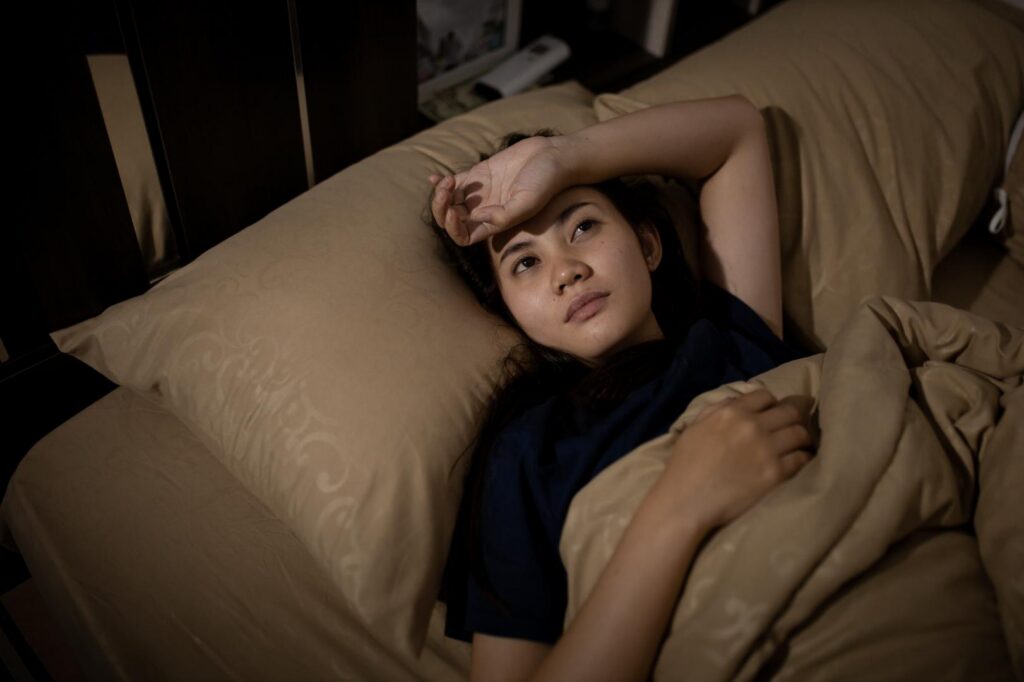
Menopause can affect sleep quality, particularly when night sweats or other symptoms interrupt rest. For some women, this period also coincides with significant personal or professional responsibilities.
Severe physical or emotional stress can contribute to a shedding condition called telogen effluvium. This occurs when more follicles than usual enter the resting phase, causing increased shedding several months later.
Unlike female pattern hair loss, telogen effluvium often produces diffuse shedding across the scalp. Women may notice more strands in the shower or brush rather than a slowly widening part.
The two conditions can also occur together. Someone with underlying female pattern hair loss may experience additional shedding following illness, major stress, or substantial weight changes.
Improving sleep and managing stress can support general well-being, but these changes shouldn’t replace medical evaluation when hair loss persists. Treating an underlying thyroid disorder or another medical condition may be equally important.
Understanding these overlapping influences helps explain why menopause-related hair changes aren’t always caused by hormones alone.
Your Hair Deserves Thoughtful Care
Menopause may change how your hair grows, but hair thinning doesn’t have to remain an unanswered concern. With an accurate diagnosis and an individualized treatment plan, many women can explore meaningful ways to support healthier-looking hair and address progressive loss.
At Rapaport Hair Institute in New Jersey, patients can receive professional evaluations and explore non-surgical hair restoration options tailored to their needs. Schedule a consultation to better understand your hair changes and discover which treatments may help you maintain or improve your hair’s fullness.
Contact us today!