

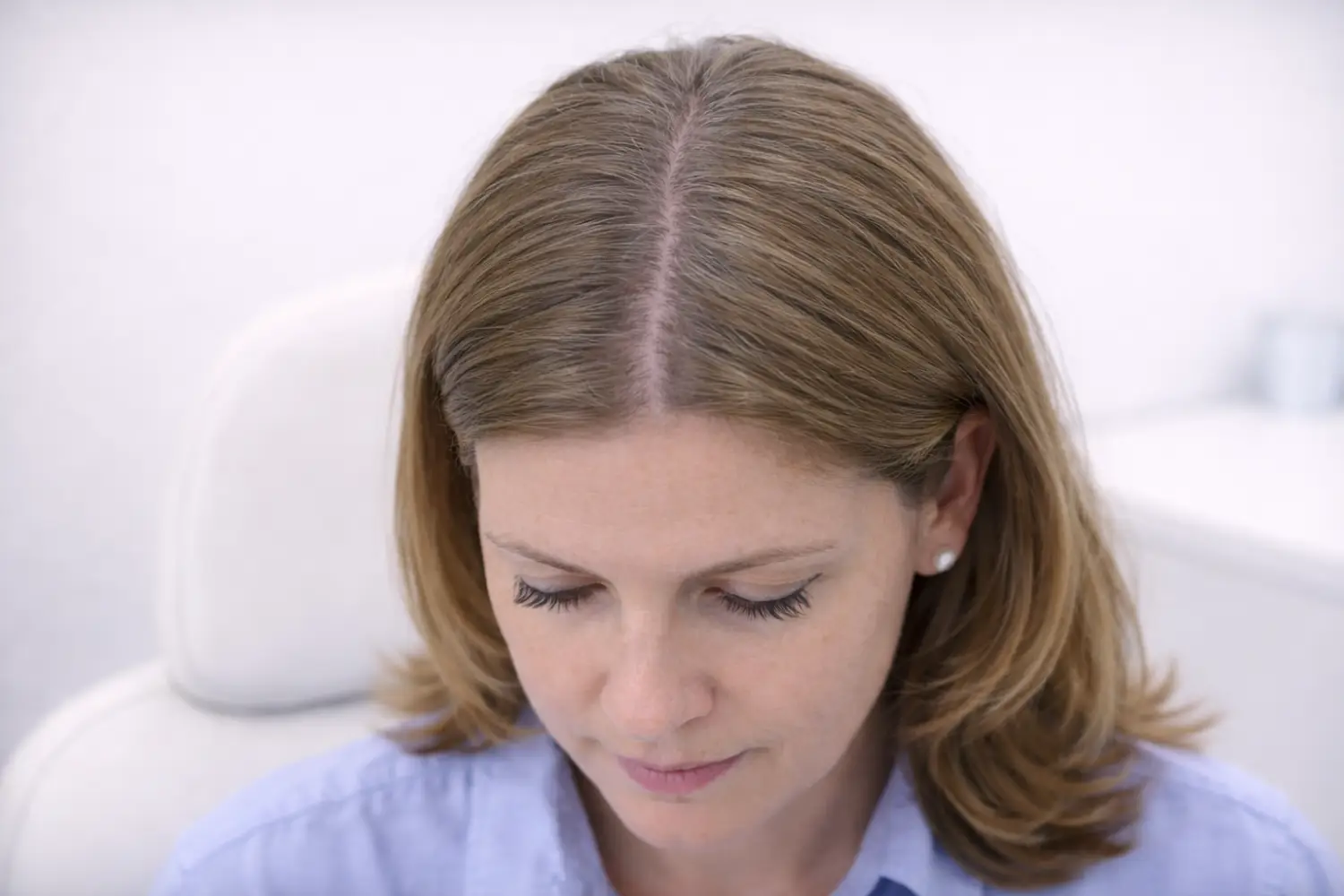
Exosome therapy stimulates dormant hair follicles, reduces shedding, and improves hair density within 2–4 months, all without surgery. At the Rapaport Hair Institute’s Exosome Program, patients gain access to high-purity regenerative biologics clinically designed to reverse early-stage hair thinning using cell-to-cell communication pathways.
Each treatment is performed by board-certified dermatologist Dr. Jeffrey Rapaport and tailored to restore the scalp’s regenerative environment.
What Are Exosomes and How Do They Help Regrow Hair Without Surgery?
Exosomes regenerate hair by delivering bioactive signals directly to damaged hair follicles. They are extracellular vesicles derived from stem cells that carry proteins, peptides, mRNA, and growth factors. These components communicate with surrounding cells to initiate repair and regeneration.
Unlike stem cell therapy, exosomes contain no live cells. They act through targeted molecular messaging that influences follicular behavior at a structural level. Compared with platelet-rich plasma (PRP), exosomes provide a broader spectrum of growth signals and greater purity, with reduced inflammation and a lower risk of variability.
At the Rapaport Hair Institute, exosomes are not injected. Instead, they are delivered into the scalp using a specialized device called Juvasonic, which mechanically separates epidermal cells and allows the exosomes to penetrate into the skin and reach the follicular environment.
How Exosomes Reactivate Dormant Follicles and Stimulate Hair Growth
Exosomes restore hair growth by stimulating the follicle stem cell niche and restarting the anagen (growth) phase. They deliver Wnt/β-catenin pathway activators and other regenerative peptides that upregulate cellular activity in hair follicle stem cells.
Hair loss often results from miniaturization, where follicles shrink and cycle prematurely. Exosome therapy reverses this by enhancing the communication between dermal papilla cells and surrounding structures. This signalling restarts healthy follicle cycling, producing thicker and longer shafts.
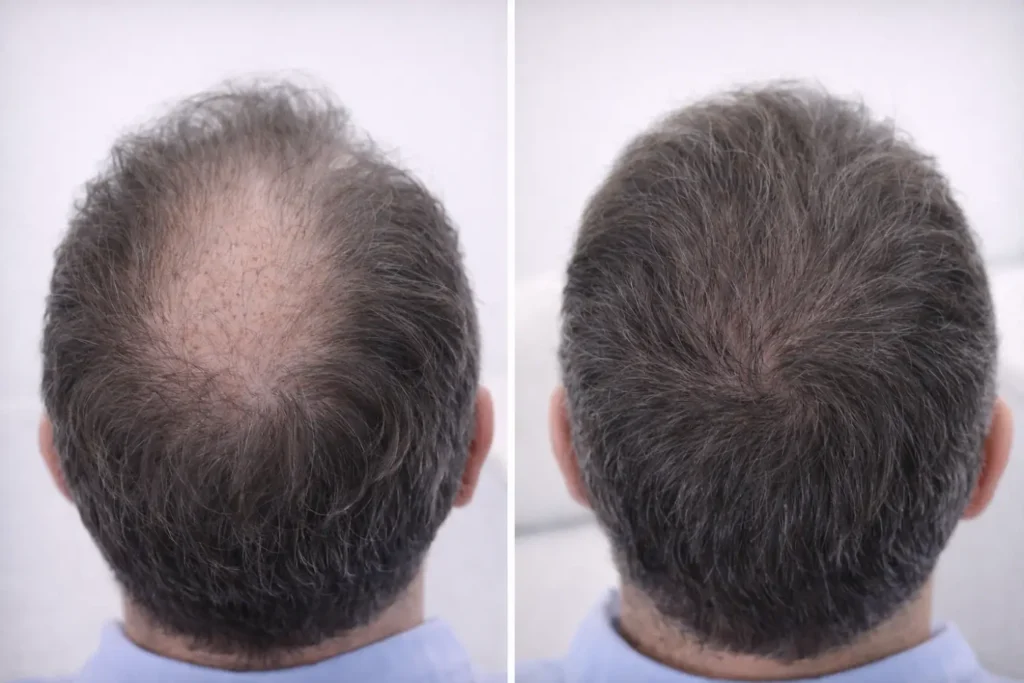
Clinical studies show exosome treatment can increase hair density by up to 35 hairs per cm² within 12–24 weeks. Rapaport’s approach includes imaging with HairMetrix diagnostics to assess follicle responsiveness and track progress over time.
Dermal Papilla Cell Stimulation: Why It Matters in Exosome Therapy
Exosomes improve hair quality by activating dermal papilla cells at the base of each follicle. These cells regulate follicle development, nutrient absorption, and hair shaft thickness.
Exosomal factors such as FGF7, VEGF, and miRNA sequences increase dermal papilla proliferation and enhance intercellular communication. This triggers keratinocyte and melanocyte production, leading to visibly healthier hair.
When follicles enter dormancy, dermal papilla signalling becomes impaired. Exosome therapy restores this communication, allowing follicles to re-enter the active growth cycle and maintain thickness over time. Treatments performed at the Rapaport Hair Institute use optimized delivery techniques to ensure deeper follicular penetration with minimal discomfort.
At Rapaport Hair Institute, exosomes are directed into the scalp using the Juvasonic delivery system rather than injected, allowing controlled penetration through mechanically separated epidermal layers for more uniform biologic distribution.
Angiogenesis and Anti-Apoptotic Effects of Exosomes in Hair Restoration
Exosomes promote angiogenesis, thereby improving blood flow around hair follicles and enhancing nutrient delivery. They release vascular endothelial growth factor (VEGF) and other angiogenic factors that promote microvascular formation in the scalp.
This increase in vascular supply strengthens follicle health and oxygenation, both essential for sustained hair production. In parallel, exosomes activate anti-apoptotic proteins such as Bcl-2, which protect follicles from premature death.
Together, these effects extend the lifespan of each hair and improve regrowth density. Compared to minoxidil, which passively dilates blood vessels, exosomes actively stimulate new vessel formation and biologic renewal.
How Exosomes Regulate the Hair Growth Cycle for Long-Term Results
Exosomes improve long-term hair outcomes by regulating the hair growth cycle and reducing early entry into shedding phases. They extend the anagen phase while delaying catagen and telogen transitions through targeted molecular control.
Hair loss accelerates when follicles cycle too quickly through their natural phases. Exosome therapy corrects this by restoring normal follicular rhythm and sustaining activity during the growth phase.
The result is denser hair coverage, less daily shedding, and higher overall follicular productivity. For patients experiencing telogen effluvium or hormone-triggered thinning, this cycle regulation delivers visible results without medication or systemic exposure.
Who is a Good Candidate for Exosome Hair Therapy in New Jersey?
Exosome therapy benefits men and women with early-stage androgenetic alopecia, stress-related shedding, or post-COVID hair loss. It supports patients with thinning but active follicles, where regenerative signaling can restore function.
Candidates include individuals seeking non-surgical, hormone-free options who prefer a biologic approach. Women facing diffuse hair thinning from postpartum changes or perimenopause often respond well to exosome-based treatments.
Younger patients often perform just as well with PRP therapy as with exosomes, while older patients may experience stronger regenerative responses with exosome therapy. In many cases, combining PRP and exosomes produces the most effective outcomes by pairing regenerative growth factors with advanced biologic signalling.
Scarring alopecia, autoimmune disorders, or complete follicle loss reduce treatment effectiveness. In these cases, advanced imaging with HairMetrix helps determine viability before initiating therapy at the Rapaport Hair Institute.
Exosomes vs PRP vs Stem Cell Therapy: What’s the Most Effective Regenerative Approach?
Exosomes outperform other regenerative treatments by delivering targeted biologic instructions without using whole cells or platelets. They communicate with hair follicle structures through nanoscale vesicles, achieving deeper penetration and broader signalling.
PRP therapy uses growth factors extracted from the patient’s own blood. While effective, PRP depends on the individual’s platelet concentration and lacks the consistency of lab-derived exosomes. PRP typically requires 3–6 sessions, with results over 6–9 months.
Stem cell therapy involves the transplantation of live cells, often requiring cell extraction, culture, and surgical reimplantation. Younger patients often respond similarly to PRP and exosome therapy individually, whereas older patients may benefit more from exosomes’ stronger signaling potential. However, combining PRP with exosomes often yields the most potent regenerative response because PRP stimulates follicle repair, while exosomes enhance cellular communication and regeneration.
| Treatment Type | Key Mechanism | Invasiveness | Session Range | Timeline | Use Case |
| Exosomes | Bioactive signal delivery | Minimally invasive | 2–4 sessions | 3–6 months | Early thinning, post-COVID loss |
| PRP | Platelet-derived factors | Minimally invasive | 3–6 sessions | 6–9 months | Early hair loss, maintenance |
| Stem Cell | Cellular reimplantation | Surgical | 1+ procedure | 6–12 months | Advanced cases, scarring alopecia |
Exosomes can be paired with PRP or microneedling at the Rapaport Hair Institute to amplify outcomes, depending on the patient’s diagnosis and follicular status.
Is Exosome Therapy FDA-Approved and Safe for Hair Regrowth?
Exosome therapy uses purified biologics manufactured under strict laboratory controls; however, the treatment is currently performed off-label under physician care. While the FDA has not yet approved exosomes for hair loss, clinical-grade formulations used at the Rapaport Hair Institute are sourced from reputable, sterilised, and tested laboratories.
Patients experience minimal side effects. Most report slight tenderness or redness at the injection site for 24–48 hours. No hormone manipulation or systemic medication is involved, making exosomes suitable for individuals avoiding pharmacologic options.
Dr. Jeffrey Rapaport, a board-certified dermatologist, oversees every protocol. His expertise in non-surgical hair restoration ensures patient safety and consistent results using evidence-based techniques.
Timeline, Cost, and What to Expect During Exosome Hair Treatment
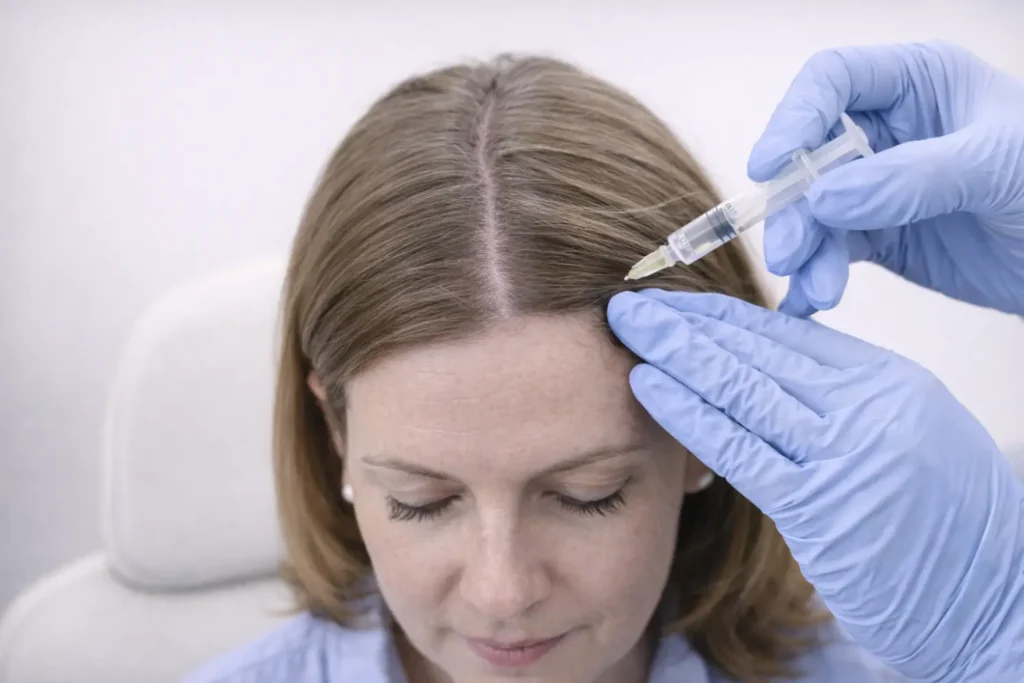
Each exosome session takes 30 to 45 minutes. Rather than injecting exosomes, Dr. Rapaport applies them using the Juvasonic device, which mechanically separates epidermal cells so the exosomes can penetrate into the scalp and reach the follicular environment
Most patients receive 2 to 4 sessions spaced 4 to 6 weeks apart. Exosomes continue to function at the cellular level for several weeks after each treatment.
Treatment costs range from $2,000 to $10,000, depending on the treatment area size and the number of sessions required. Results begin with reduced shedding in 2 to 4 weeks, followed by visible thickening and increased density between 6 and 12 weeks. Peak regrowth typically occurs between 3 and 6 months.
Aftercare includes avoiding exercise for 24 hours and delaying scalp washing for the rest of the day. No downtime is required, and patients typically return to their daily routines immediately.nts across Bergen County and the greater New York metro area, providing personalized care rooted in science.
Why Choose Dr. Jeffrey Rapaport for Exosome Hair Restoration in Englewood Cliffs, NJ?
Dr. Jeffrey Rapaport performs every exosome procedure at the Rapaport Hair Institute using a combination of experience, advanced diagnostics, and biologic precision. As a board-certified dermatologist and national authority in non-surgical hair restoration, Dr. Rapaport has completed over 4,000 procedures and authored peer-reviewed publications on PRP and regenerative therapies.
Patients benefit from HairMetrix diagnostic imaging, which maps follicle density, growth phases, and treatment response without scalp clipping or biopsy. Exosomes are integrated into fully customized plans alongside other non-surgical technologies such as PRP, KeraFactor, and EnerJet when indicated.
Located in Englewood Cliffs, New Jersey, the Rapaport Hair Institute serves patients across Bergen County and the greater New York metro area, providing personalized care rooted in science.
Schedule Your Consultation for Exosome Hair Therapy in Bergen County, NJ
Exosome therapy at the Rapaport Hair Institute offers a regenerative, non-surgical solution to early-stage hair thinning. If you’re looking to reduce shedding, improve follicle health, and achieve visibly denser hair without medication or surgery, our personalized biologic protocols are designed for you.
Treatments are performed by board-certified dermatologist Dr. Jeffrey Rapaport using research-backed technologies and precision diagnostics.
Contact us today to schedule your consultation at our Englewood Cliffs, NJ clinic and take the next step in restoring your hair with science.
Frequently Asked Questions
What are exosomes, and how do they work for hair loss?
Exosomes deliver growth factors, peptides, and genetic signals to reactivate dormant follicles and improve hair density. They initiate repair by enhancing communication between stem cells and dermal papilla cells.
How is exosome therapy different from PRP?
Exosome therapy provides a broader, lab-controlled spectrum of regenerative factors, while PRP relies on the patient’s own platelet quality. Exosomes may require fewer sessions and may produce results more quickly in select patients.
Is exosome treatment FDA-approved for hair loss?
No current FDA approval exists for exosomes in hair restoration. However, clinical-grade exosomes used at the Rapaport Hair Institute are tested for safety, purity, and sterility, and are administered under dermatologic supervision.
How soon will I observe hair regrowth after exosome treatment?
Most patients see reduced shedding within 2 to 4 weeks. Visible thickening typically appears around 6 to 12 weeks, with continued improvement up to 6 months.
Are exosomes safe for women with thinning hair?
Exosomes are safe and effective for women experiencing diffuse thinning, hormonal shedding, or post-COVID hair loss. They contain no hormones or drugs, making them compatible with sensitive scalp conditions.
Can exosomes be combined with PRP?
Yes. PRP and exosomes are frequently combined because PRP stimulates follicle repair while exosomes enhance cellular communication and regeneration, making the combination one of the most effective non-surgical regenerative approaches for hair restoration.
What’s the cost of exosome therapy in New Jersey?
Treatment plans typically range between $2,000 and $10,000, depending on scalp area and number of sessions. A consultation determines the exact protocol and whether exosome therapy is appropriate.