

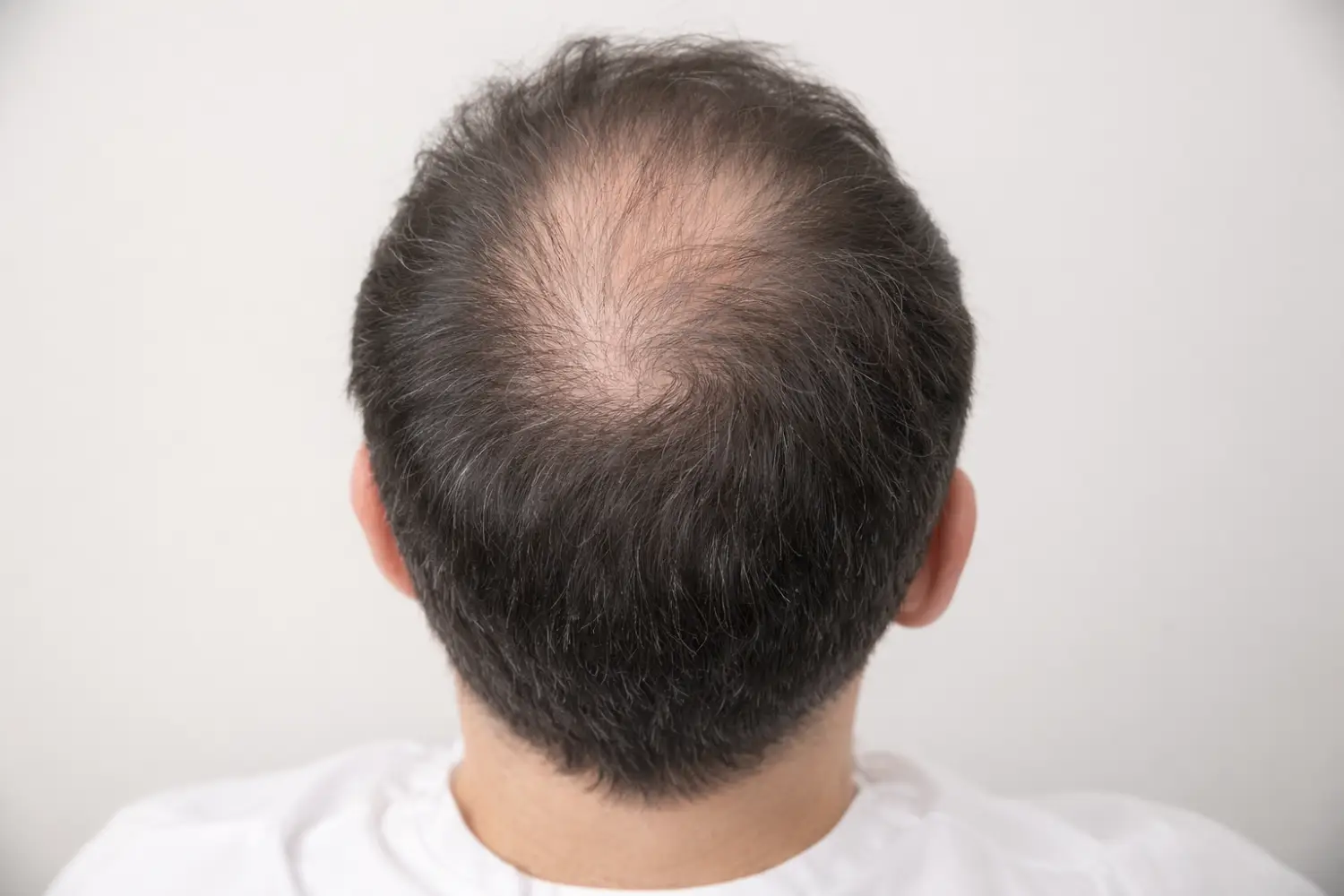
Combining Dutasteride mesotherapy with PRP hair restoration therapy effectively slows male pattern baldness while promoting regrowth. This dual approach blocks hormonal hair loss at the root and revitalizes dormant follicles. Patients experience faster stabilization and stronger regrowth by addressing both causes of hair thinning.
Male pattern baldness progresses when dihydrotestosterone (DHT) shrinks hair follicles, reducing density over time. Regenerative treatments like PRP can repair follicles, but without DHT control, the loss cycle continues. Dutasteride directly suppresses DHT at the scalp. PRP reactivates follicles. Together, they deliver results faster and more reliably than either treatment alone.
What Is Male Pattern Baldness and Why Is It Hard to Reverse?
Male pattern baldness occurs when DHT causes follicular miniaturization in genetically sensitive men. As follicles shrink, they produce thinner, weaker hair until growth stops entirely. The condition worsens over time, progressing from temporal recession to crown thinning and, in advanced cases, complete scalp exposure.
Hair loss becomes difficult to reverse because untreated follicles lose their regenerative potential. Once the follicle shrinks past a threshold, it enters permanent dormancy. DHT continues to act unless pharmacologically blocked. Most over-the-counter products lack sufficient potency to affect this hormonal pathway, making clinical intervention necessary.
At Rapaport Hair Institute, advanced diagnostic tools like HairMetrix identify active follicles and measure anagen/telogen ratios. This enables Dr. Jeffrey Rapaport to select patients who could benefit from combination therapy, particularly those in Norwood stages II–V with salvageable hair density.
How PRP Therapy Stimulates Regrowth in Dormant Hair Follicles
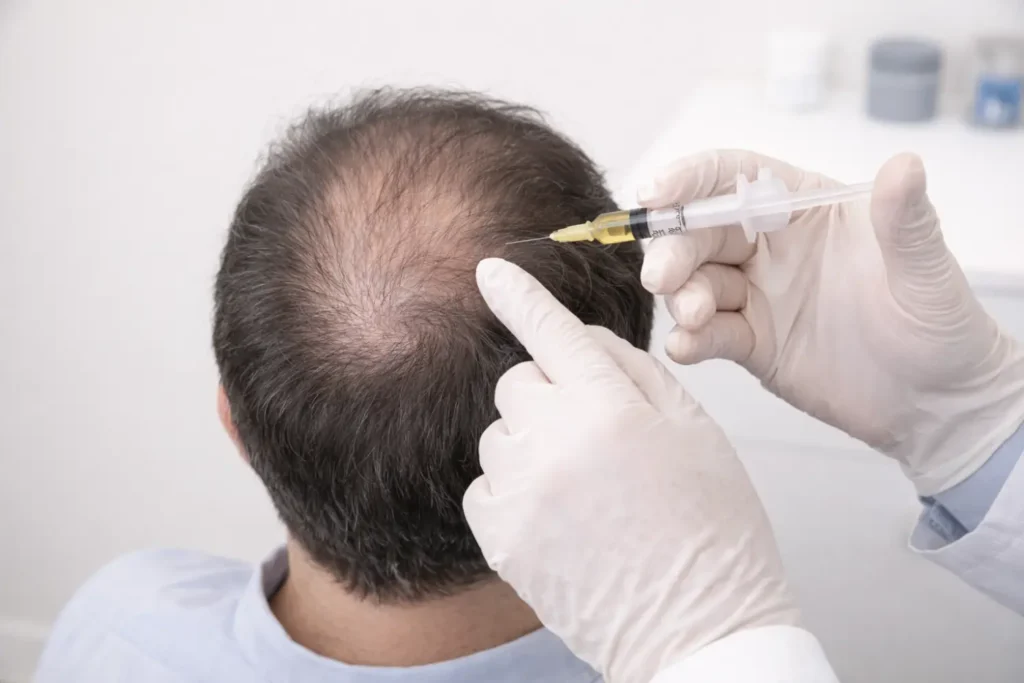
PRP delivers high concentrations of growth factors directly into the scalp, stimulating hair regrowth at the follicular level. Derived from the patient’s blood, this autologous serum activates stem cells, promotes angiogenesis, and increases collagen production around weakened follicles.
Growth factors such as VEGF, PDGF, IGF-1, and TGF-β prolong the anagen (growth) phase of the hair cycle. PRP also improves vascular supply around the follicle bulb, enhancing nutrient delivery and oxygenation. These biological effects restore miniaturized follicles, resulting in thicker shafts and increased density over time.
At Rapaport Hair Institute, the Rapid PRP Technique consists of four monthly sessions followed by customized maintenance. Dr. Rapaport tailors injection zones based on HairMetrix imaging, ensuring precision in follicular targeting. Patients typically notice reduced shedding within the first two months and visible density improvements by month three.
How Dutasteride Mesotherapy Targets the Root Hormonal Cause of Hair Loss
Dutasteride mesotherapy suppresses DHT production in the scalp, halting the hormonal process responsible for androgenetic alopecia. Dutasteride blocks both Type I and Type II 5-alpha reductase enzymes, reducing DHT levels by up to 98%.
This action primarily helps maintain and preserve existing hair follicles rather than guaranteeing new hair regrowth when used as a standalone treatment.
Unlike oral medications, localized Dutasteride injections deliver the drug directly to the follicular level, minimizing systemic absorption. This method reduces the risk of hormonal side effects while maintaining therapeutic potency. Dr. Rapaport performs all injections himself, adjusting the depth and dosage to each patient’s specific needs.
Clinical studies support the efficacy of this delivery route. A published trial in the Journal of Cutaneous and Aesthetic Surgery reported significant gains in hair density and thickness after six sessions of Dutasteride mesotherapy. Compared to oral Dutasteride, mesotherapy produced similar results with fewer side effects.
Why Combining PRP and Dutasteride Is the Most Effective Non-Surgical Option
Dutasteride and PRP work through complementary mechanisms; one blocks hormonal damage, the other restores follicular function. This dual approach provides faster results, better density retention, and long-term stabilization for patients with male pattern hair loss.
Dutasteride helps stabilize hair loss and protect existing follicles from DHT damage, while PRP provides the regenerative stimulation needed to promote follicular recovery and potential regrowth.
Dutasteride stops follicle damage by suppressing scalp DHT levels. PRP repairs damaged follicles and reactivates growth. When applied together, they address both the cause and consequence of androgenetic alopecia. This synergy improves outcomes in early- to moderate-stage cases and offers a non-surgical option for those seeking visible regrowth without medication side effects.
Patients who undergo combination therapy at Rapaport Hair Institute follow a coordinated protocol that alternates treatments to maximize biological effect. HairMetrix imaging ensures treatment is targeted, data-driven, and adjusted in real time based on response.
How Long Does It Take to See Results From PRP and Dutasteride Therapy?
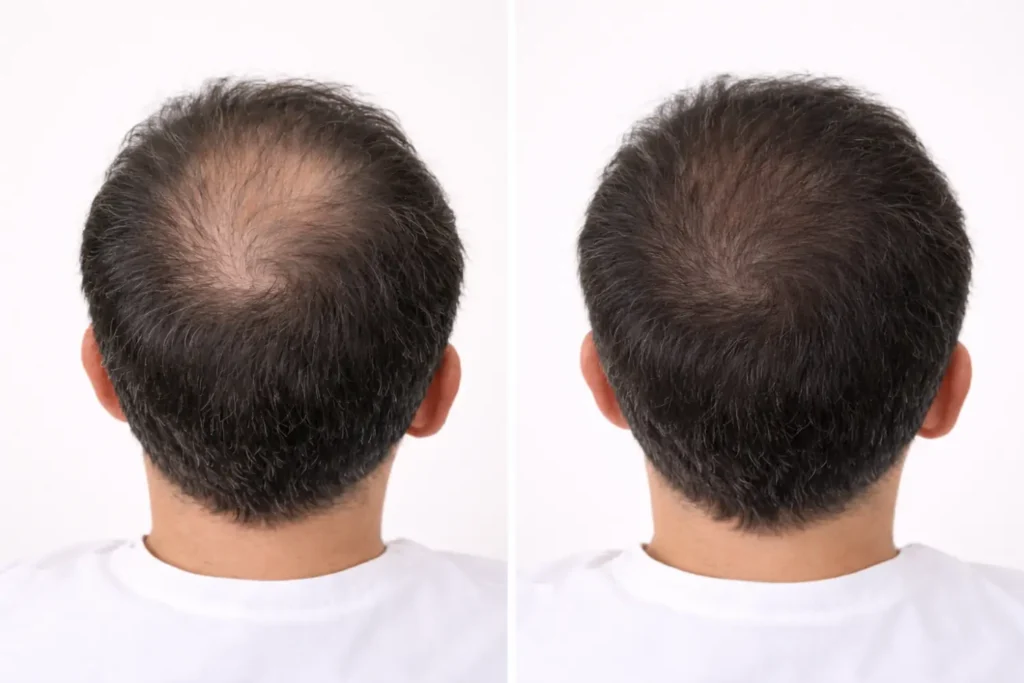
Most patients begin seeing results from combination therapy within 3 to 6 months. Dutasteride mesotherapy reduces shedding within the first 8 to 12 weeks by suppressing DHT activity at the scalp. PRP initiates follicle regrowth shortly after, with new density gains appearing after the third or fourth session.
By month six, patients typically report stronger hair shafts, reduced miniaturization, and improved scalp coverage. Consistency and adherence to treatment spacing are essential. Delayed or skipped sessions can interrupt the regenerative cycle and reduce overall gains.
Peak results are often seen between 6 and 12 months, depending on the severity of hair loss and follicular responsiveness. Maintenance sessions are scheduled every 4 to 6 months to preserve results, especially in patients with a strong DHT-driven pattern or genetic predisposition.
Are There Risks or Side Effects With PRP + Dutasteride?
Combination therapy is safe when performed under clinical guidance using localized delivery methods. PRP is autologous, meaning it uses the patient’s own plasma, which eliminates risks of rejection or allergic reaction. Side effects are typically limited to mild swelling, scalp tightness, or minor bruising at the injection sites.
Dutasteride mesotherapy reduces systemic exposure compared to oral DHT blockers. By injecting the medication directly into the scalp, Dr. Rapaport lowers the likelihood of systemic hormonal effects such as sexual dysfunction or fatigue. This route offers targeted inhibition with a higher margin of safety for long-term use.
All injections are administered personally by Dr. Rapaport to control depth, volume, and location with precision. No procedure is delegated. This level of clinical oversight reduces complications and ensures the highest level of patient safety and protocol adherence.
Who Is a Good Candidate for This Dual-Modality Treatment?
Ideal candidates for Dutasteride + PRP therapy are men between 25 and 50 years old with early to moderate androgenetic alopecia. Patients experiencing active shedding, visible thinning at the crown or hairline, or diffuse pattern loss often respond best when follicles are still biologically active.
HairMetrix AI imaging at Rapaport Hair Institute allows detailed follicular mapping to assess anagen/telogen ratios, density per cm², and miniaturization trends. This data determines eligibility and guides treatment planning. Patients with post-COVID telogen effluvium or stress-induced shedding may also benefit when underlying hormonal sensitivity is detected.
Candidates who previously failed topical minoxidil or oral finasteride due to intolerance or poor response often see stronger results with this precision-based protocol. The combination approach delivers targeted hormone suppression with regenerative activation, addressing both the cause and the damage of male pattern hair loss.
Why Choose Rapaport Hair Institute for PRP and Dutasteride Hair Restoration?
Dr. Jeffrey Rapaport performs all procedures personally using advanced imaging and custom dosing to deliver physician-grade outcomes. With over 4,000 hair restoration procedures completed, he brings unmatched dermatologic expertise to each case.
HairMetrix diagnostic imaging is used to scan and quantify scalp health without clipping or invasive lab work. These scans help track treatment success, compare before/after metrics, and adjust protocols based on follicular response.
The clinic also offers EnerJet needle-free PRP delivery, ideal for patients sensitive to injections or seeking added comfort without compromising efficacy. This makes the Rapaport Hair Institute one of the few clinics in New Jersey offering complete non-surgical customization under a board-certified dermatologist.
Patients choose this clinic for its integrity, data-driven care, and a level of hands-on expertise that can’t be replicated by chain medspas or cosmetic franchises.
Schedule a Hair Loss Consultation in Englewood Cliffs, NJ
Hair loss doesn’t improve without action. Schedule a consultation with Dr. Jeffrey Rapaport at Rapaport Hair Institute to explore a data-driven, non-surgical solution customized for your scalp and pattern. Each protocol is physician-delivered, research-backed, and designed for results.
Frequently Asked Questions:
Does PRP help hair loss caused by stress or illness, not genetics?
PRP improves hair density in stress-related or post-illness shedding by restoring follicle cycling and scalp circulation. Results improve further when underlying hormonal sensitivity or miniaturization is identified and addressed during treatment planning.
Can PRP and Dutasteride improve hair thickness, not only hair count?
PRP increases hair shaft diameter by activating growth factors that strengthen existing follicles, while Dutasteride primarily helps preserve existing hair by reducing DHT-driven thinning rather than guaranteeing regrowth when used alone. Together, they improve both visual density and measurable hair thickness across treated scalp areas.
Does scalp injection depth affect PRP and Dutasteride results?
Injection depth directly affects follicle exposure to growth factors and medication. Proper dermal-level delivery improves absorption, limits diffusion, and increases response consistency, which is why physician-performed injections lead to more predictable outcomes.
Can PRP and Dutasteride specifically slow hairline recession?
This combination slows hairline recession by stabilizing DHT-sensitive follicles and improving blood supply in frontal scalp zones. Results depend on remaining follicle viability, which is evaluated through diagnostic imaging before treatment initiation.
Does age affect response to PRP and Dutasteride therapy?
Younger patients typically respond faster because follicles retain regenerative capacity longer. Older patients can still benefit when follicles remain active, though treatment may require longer timelines and more structured maintenance protocols.