

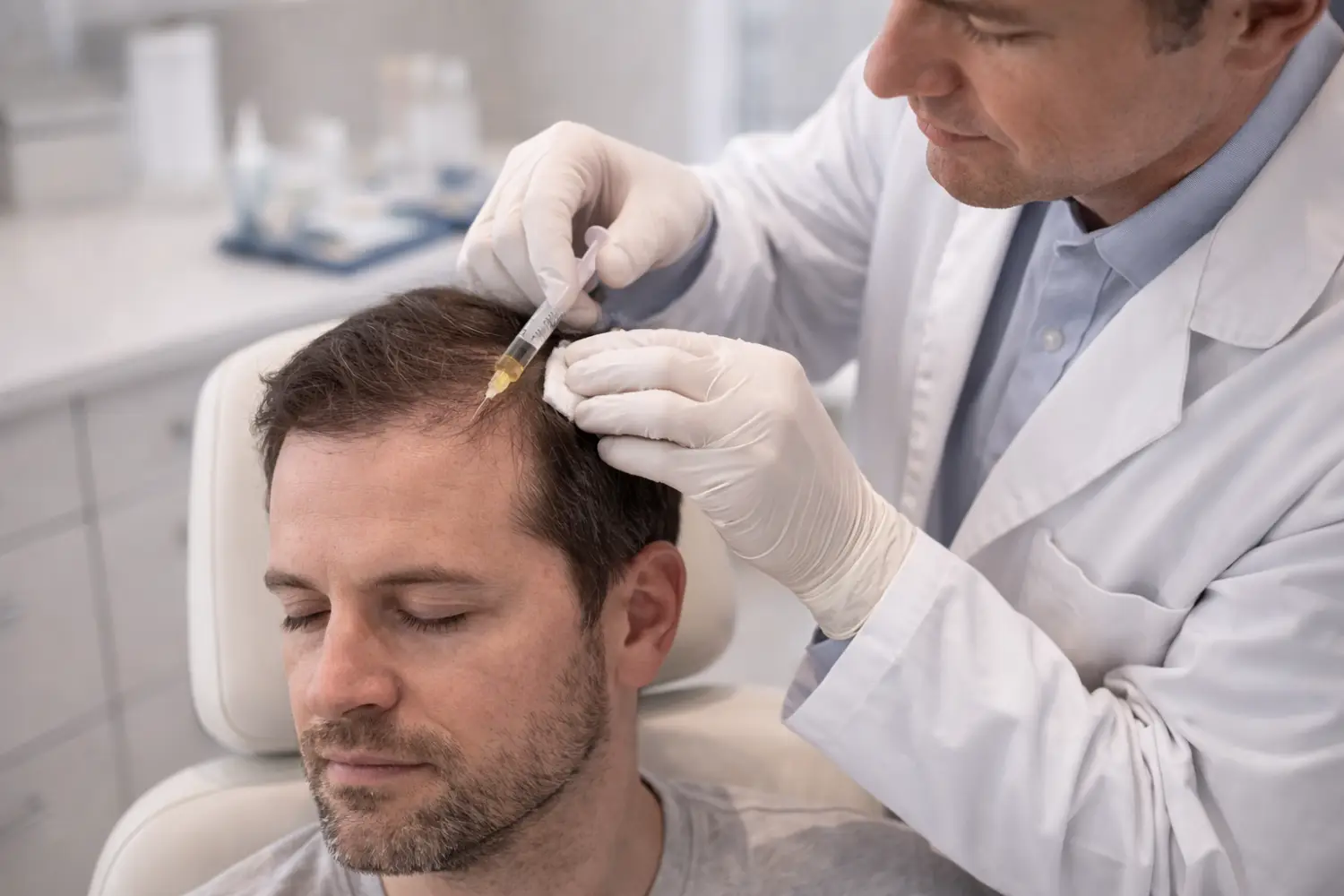
Platelet-Rich Plasma (PRP) therapy stimulates hair follicles by injecting concentrated growth factors from the patient’s own blood. This non-surgical treatment accelerates follicular repair, slows shedding, and improves hair density.
At Rapaport Hair Institute in Englewood Cliffs, NJ, Dr. Jeffrey Rapaport offers PRP using a high-purity protocol tailored to biological hair loss patterns in both men and women. Treatment plans are customized using diagnostic tools like HairMetrix to maximize results while respecting individual physiology.
What Is Platelet-Rich Plasma (PRP) Therapy for Hair Loss?
PRP hair therapy uses a patient’s concentrated blood plasma to activate dormant hair follicles and support new growth. The treatment extracts platelets, rich in bioactive growth factors, through centrifugation and reintroduces them into targeted scalp zones. These growth factors, such as PDGF and VEGF, stimulate tissue regeneration, improve circulation, and transition follicles from the resting (telogen) to the active growth (anagen) phase.
PRP functions as a regenerative treatment for early to moderate hair loss. It promotes natural follicular repair without drugs or surgery, offering a safe, evidence-backed approach to hair restoration.
How PRP Treatment Is Performed in a Clinical Setting
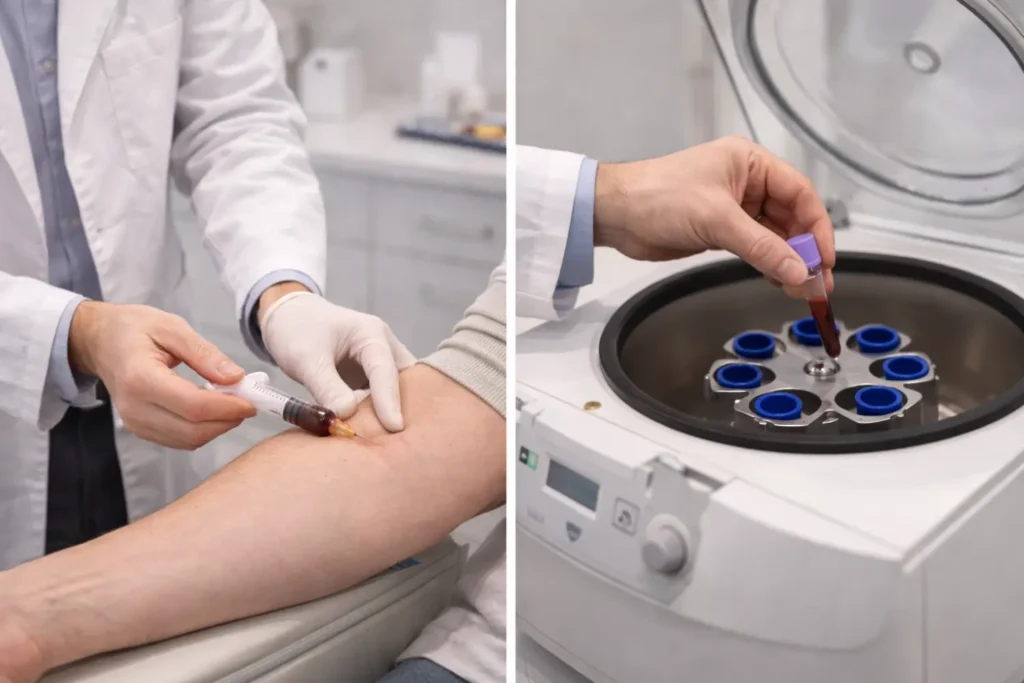
PRP is prepared and injected in a single in-office session using a standardized, sterile protocol. Dr. Rapaport draws a small blood sample, processes it in a high-speed centrifuge, and isolates a platelet-rich fraction. The PRP is injected into thinning areas of the scalp using fine needles. For enhanced patient comfort, a skin cryo chiller is applied to cool the scalp during the procedure.
The Rapid PRP Technique delivers optimal results with four monthly sessions. This protocol maintains consistent follicular stimulation and supports progressive growth. Each session lasts under 60 minutes, requires no downtime, and is designed to integrate seamlessly into your routine.
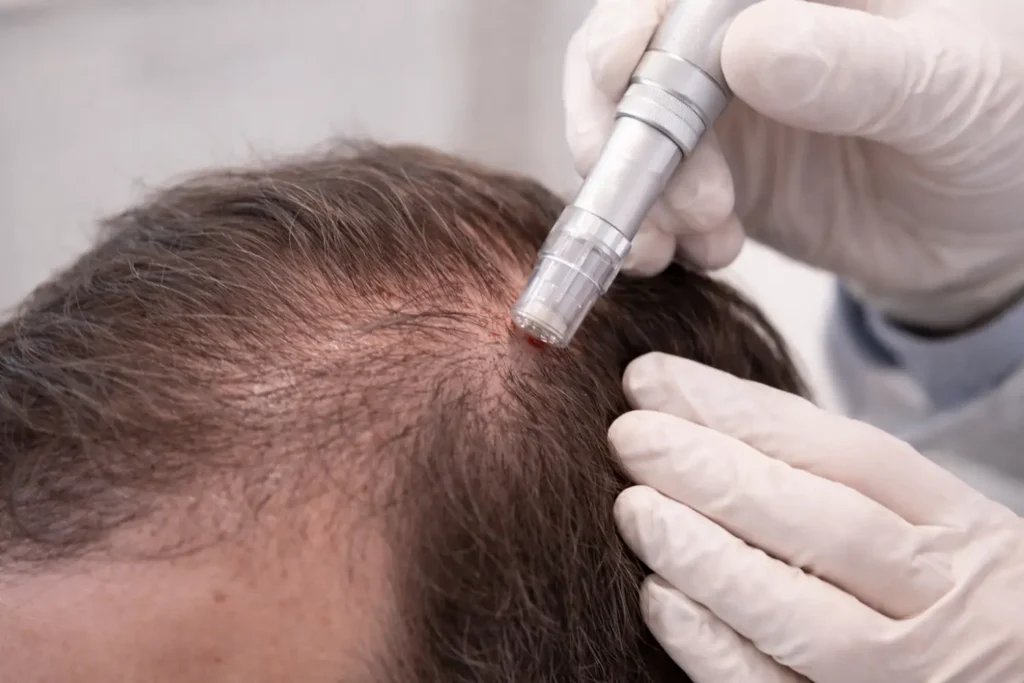
Microneedling may be added to improve PRP absorption. By creating microchannels, this method increases PRP penetration and enhances collagen signaling in the scalp.
How Hair Loss Differs in Men vs Women
Men typically lose hair due to DHT sensitivity, while women experience diffuse thinning linked to hormones. Male pattern baldness (androgenetic alopecia) presents as crown or temple recession caused by dihydrotestosterone’s effects on follicle miniaturization. In women, hair thinning often occurs across the entire scalp, influenced by menopause, postpartum shifts, or conditions like PCOS.
Gender-specific diagnosis guides the PRP plan. Dr. Rapaport uses HairMetrix AI imaging to analyze scalp density, growth phase ratio, and follicular health. This allows precision-targeted PRP delivery to match the biological origin of hair loss.
Gender-Specific PRP Treatment Protocols: What Actually Varies?
Men and women respond differently to PRP due to variation in hair loss patterns, hormonal influence, and scalp anatomy. At Rapaport Hair Institute, protocols are adjusted by injection depth, area coverage, and adjunctive therapy selection.
| Attribute | Men | Women |
| Pattern | Recession at the crown and temples | Diffuse thinning across the scalp |
| Injection Depth | Deeper targeting of specific zones | Broad, uniform coverage |
| Frequency | Monthly for 4+ sessions | Often fewer sessions, depending on severity |
| Adjuncts | Dutasteride Mesotherapy | KeraFactor + hormone screening |
| Outcome Focus | Increased density and slowed recession | Diameter thickening and reduced shedding |
HairMetrix imaging confirms treatment response and guides ongoing adjustments. Patients benefit from data-driven care built on clinical observations, not generic formulas.
PRP Effectiveness by Gender: What Do Clinical Studies Show?
Men with early-stage androgenetic alopecia gain density faster, while women see improvement in diameter and quality. In a meta-analysis published in Dermatologic Surgery, male patients showed an average increase of 25.09 hairs/cm² after consistent PRP sessions. Response peaks when treatment begins early, before follicular dropout.
Women often benefit from PRP when thinning is caused by hormonal changes. Postmenopausal patients and those with PCOS or postpartum shedding experience reduced hair fall and visual fullness across the scalp. PRP enhances follicle diameter rather than restoring full density in advanced cases.
Peer-reviewed trials confirm PRP’s role as a frontline non-surgical therapy. Dr. Rapaport’s published work reinforces this conclusion, contributing to global dermatologic standards in PRP-based hair restoration.
Combining PRP with Other Hair Restoration Therapies for Better Results
Men benefit from combining PRP with Dutasteride Mesotherapy, while women respond well to KeraFactor growth factor support. At Rapaport Hair Institute, PRP rarely stands alone; it is paired with complementary treatments for maximum synergy.
For men:
- PRP + Dutasteride Mesotherapy blocks local DHT without systemic exposure.
- Microneedling with PRP enhances growth factor delivery into miniaturized follicles.
- PRP + KeraFactor serum supports scalp health and follicular signaling.
For women:
- PRP + KeraFactor serum delivers biomimetic peptides that promote scalp health without hormones.
- PRP + Hormonal assessment addresses root hormonal triggers affecting shedding.
Needle-sensitive patients may opt for EnerJet Needle-Free PRP. This advanced system delivers PRP using high-pressure air, reducing discomfort while preserving efficacy.
Session Count, Cost, and Long-Term Maintenance: What to Expect
Most patients require 3 to 6 PRP sessions initially, followed by maintenance every 4 to 6 months. At Rapaport Hair Institute, Dr. Rapaport designs each plan around the stage of hair loss, gender-specific needs, and diagnostic data from HairMetrix imaging.
Treatment cost varies based on treatment area, session count, and optional add-ons. In New Jersey, pricing for PRP typically ranges between $650 and $950 per session. Package options are available for multi-session treatments. Payment plans are offered to ensure affordability.
Ongoing maintenance is critical for sustained results. Patients receive follow-up imaging, response tracking, and protocol updates based on hair density and scalp health. Consistency preserves gains, especially for patients managing progressive conditions like androgenetic alopecia.
Safety, Downtime, and Side Effects: What Both Genders Should Know
PRP hair therapy is a safe, in-office procedure using your own blood, eliminating allergy or rejection risk. Most sessions are completed within 60 minutes with minimal discomfort. Dr. Rapaport applies cooling during treatment to reduce sensitivity.
Common side effects include mild redness, swelling, or scalp tenderness that resolve within 24 to 48 hours. Less common reactions may include bruising at injection points, which also subsides without intervention. No post-treatment downtime is required.
Because the therapy uses autologous plasma, systemic side effects are not observed. PRP avoids risks linked to oral medications or hormone therapies and is safe for patients with sensitivities or complex medical histories.maging to measure response and adjust treatments. OurPRP Gallery shows real outcomes experienced by patients.
Results Timeline and Before-After Expectations
Hair regrowth with PRP is gradual and builds over several months. Results begin as reduced shedding and progress toward visible thickening.
| Timeline | Expected Change |
| Week 0–4 | Reduced shedding, improved scalp comfort |
| Month 2–3 | Early signs of regrowth, stronger strands |
| Month 4–6 | Visible thickening, more volume |
| Month 6–12 | Stable growth, denser appearance |
Results depend on hair loss severity, hormonal health, and protocol adherence. Dr. Rapaport uses HairMetrix imaging to measure response and adjust treatments. Our PRP Gallery shows real outcomes experienced by patients.
Why Choose a Board-Certified Dermatologist for PRP Hair Restoration?
A board-certified dermatologist offers medical-grade care, precision diagnosis, and evidence-based treatment protocols. Dr. Jeffrey Rapaport, MD, FAAD, brings 4,000+ non-surgical procedures to his patients in New Jersey. His expertise in dermatologic science ensures safe, targeted, and effective outcomes for both men and women.
Dr. Rapaport is a published expert in PRP therapy. He contributed to PRP & Microneedling in Aesthetic Medicine, and his study on PRP efficacy supports its use in clinical dermatology. Rapaport Hair Institute is one of the only clinics integrating HairMetrix Diagnostic Imaging, which allows personalized planning based on live follicular metrics.
The Institute serves patients across multiple NJ locations, including Englewood Cliffs, Old Bridge, Jersey City, and Secaucus.
Is PRP Hair Restoration Right for You?
PRP is ideal for adults experiencing early to moderate hair loss who prefer a non-surgical, drug-free approach. Patients benefit most when hair follicles are still present but weakened. Treatments are customized using imaging, hormonal assessment, and clinical history.
Schedule your consultation today with Dr. Rapaport to discover if PRP is the right path forward.
Contact us or call (551) 212-8805 to request an appointment at the Rapaport Hair Institute.
Frequently Asked Questions
Does PRP work differently for men and women?
Yes. Men typically gain density and reversal of miniaturization, while women often experience increased shaft thickness and reduced diffuse shedding.
Can PRP treat receding hairlines?
PRP can slow progression and thicken miniaturized hair in frontal zones, especially in early stages of male pattern baldness.
Is PRP safe for postmenopausal women?
Yes. PRP is frequently used in postmenopausal women with thinning caused by estrogen decline. It’s non-hormonal and personalized after hair and hormone analysis.
How is PRP at Rapaport Hair Institute different?
Dr. Rapaport uses a high-purity PRP system with optimal platelet concentration, cryo-chilling for comfort, and HairMetrix diagnostics to target active follicles.
Is PRP permanent?
No. Maintenance sessions are required due to the progressive nature of hair loss, but results are long-lasting with proper follow-up care.
What are the risks or complications?
PRP has a strong safety profile. Most patients report only minor redness or sensitivity. No long-term complications have been associated with PRP injections.