


Motherhood brings countless moments of joy—tiny fingers, sleepless nights, and an overwhelming kind of love. But for many women, it also brings something unexpected: hair loss. Months after giving birth, as hormones shift back into balance, shedding can become more noticeable, leaving many mothers alarmed by the clumps of hair collecting in the shower or on the brush.
The truth is, female hair thinning after pregnancy is extremely common. Yet while it’s a natural response to hormonal changes, that doesn’t make it any less distressing. Fortunately, modern female hair restoration offers safe, science-based solutions that help restore thickness, confidence, and calm.
At The Rapaport Hair Institute, treatments like Platelet-Rich Plasma (PRP), hair growth proteins, and topical hair growth products are designed to support women recovering from postpartum hair thinning once breastfeeding has concluded. These therapies work with your body’s natural rhythm, promoting hair regrowth while strengthening existing strands.
If you’ve been waiting for your hair to return to its pre-pregnancy fullness, read this guide to find out more about what’s happening, what can be done, and how to start your journey toward stronger, healthier hair.
Understanding Postpartum Hair Thinning
Hair growth follows a cycle of growth (anagen), transition (catagen), and rest (telogen). During pregnancy, higher estrogen levels keep hair in the growth phase longer, resulting in thicker, fuller strands. However, once estrogen levels drop after childbirth, many of those hairs may shift into the shedding phase at once—a process known as telogen effluvium.
This shedding usually begins around three to four months postpartum and can last up to a year. Though temporary, it can be emotionally difficult, especially when you’re already adapting to a new routine and identity as a mother.
But here’s something many women don’t realize: postpartum hair loss can sometimes unmask underlying thinning that existed before pregnancy, such as genetic predispositions or nutritional deficiencies.
When that happens, early intervention through female hair restoration can make all the difference in recovery and long-term growth.
What Is Hair Restoration?
Hair restoration for women is a broad term that describes treatments designed to stimulate new hair growth, repair follicles, and strengthen the scalp environment. At The Rapaport Hair Institute, a holistic, non-surgical approach is taken—one that focuses on restoring balance rather than forcing results.
Four of the most effective options include:
- Platelet-Rich Plasma (PRP) Therapy. PRP for female hair loss uses the healing power of your own blood to rejuvenate follicles. A small sample of your blood is processed in a centrifuge to separate the platelet-rich plasma, which is rich in growth factors. This plasma is then gently injected into areas of thinning to stimulate follicular activity and trigger new hair growth.
Because it’s 100% natural, PRP is ideal for postpartum women looking for a regenerative, drug-free approach. It helps strengthen weak follicles, reduce shedding, and improve density over time.
- Hair Growth Proteins. In addition to PRP, Hair Growth Proteins are designed to nourish the scalp and encourage regeneration at the cellular level. These advanced formulations contain biomimetic peptides—proteins that mimic natural growth signals in the body—to enhance hair thickness and vitality.
They complement PRP therapy beautifully, creating a synergistic effect that accelerates results and strengthens your overall hair architecture.
- Topical Exosome Therapy.
Topical exosome treatments deliver regenerative growth factors and signaling molecules directly to the scalp to encourage healing and stimulate new follicular activity. This non-invasive option can be used after pregnancy (once cleared by your provider) to restore scalp vitality, promote circulation, and support early-stage regrowth.
- Topical Hair Growth Products. For at-home maintenance, topical hair growth products play a key role in ongoing care. Formulations containing minoxidil and vitamin A derivatives help improve scalp circulation and nutrient absorption, allowing deeper penetration of restorative ingredients.
Together, these three therapies form the foundation of The Rapaport Hair Institute’s female hair growth therapy program—a personalized plan that restores not only hair but self-confidence.
Effective Ways to Address Postpartum Hair Thinning
Regaining healthy hair after pregnancy is about more than waiting for hormones to settle. It’s about nurturing your scalp, supporting your body, and choosing the right treatments that work with your biology—not against it.
Here’s how to approach the process holistically:
1. Support Your Scalp’s Healing Cycle
Your scalp is the soil from which your hair grows. After childbirth, it may be dry, inflamed, or nutrient-deprived due to hormonal fluctuations. Begin by restoring balance with gentle scalp care:
- Use sulfate-free shampoos and lightweight conditioners.
- Avoid harsh scrubbing or brushing when hair is wet, as this is when it’s most fragile.
- Incorporate a weekly scalp massage using nourishing oils to boost circulation and oxygen flow.
This foundational care makes any female hair thinning treatment more effective by preparing the scalp to receive growth factors and nutrients.
2. Consider PRP for Natural Regrowth
As one of the most promising breakthroughs in female hair restoration, PRP offers a natural, long-term solution to postpartum shedding. Growth factors in PRP help revive dormant follicles and promote new growth over the course of several sessions.
PRP also improves scalp health by increasing collagen and elastin production, which supports thicker, stronger hair over time. Because it uses your body’s own healing potential, there’s no risk of allergic reaction—just gradual, authentic results.
3. Integrate Hair Growth Proteins into Your Plan
If your hair feels fine, brittle, or slow to recover, it may be lacking essential proteins that fuel healthy follicle activity. Hair growth proteins are specially designed to bridge that gap.
These formulations contain growth factors and peptides that signal dormant follicles to re-enter the active growth phase. By supporting the scalp’s natural regenerative processes, they help restore density and shine to hair that has lost its vitality.
When combined with PRP therapy, Hair Growth Proteins can dramatically amplify the effects of your female hair thinning treatment.
4. Use Topical Treatments Consistently
Consistency is key to sustaining results. Topical hair growth products such as customized minoxidil solutions work best when used daily. These topicals enhance nutrient absorption and improve scalp circulation, giving your follicles the energy they need to thrive.
For postpartum patients, topical formulations may be introduced after breastfeeding, once cleared by your provider. Many are blended with scalp-conditioning ingredients that help calm irritation and promote lasting follicle health.
5. Address Internal Factors
Hair health mirrors whole-body health. Postpartum women often experience nutrient depletion due to pregnancy, breastfeeding, and stress. To support recovery, consider the following:
- Iron: Low iron can cause increased shedding.
- Vitamin D: Supports follicle cycling and strength.
- Biotin and Zinc: Enhance keratin production and protect against breakage.
- Protein-rich foods: Hair is made of keratin—a protein that depends on adequate dietary intake.
A balanced diet, hydration, and gentle supplementation under medical guidance can accelerate visible results from your female hair growth therapy program.
6. Manage Stress and Hormonal Balance
Cortisol, the stress hormone, can exacerbate hair loss by disrupting the growth cycle. This makes stress management a key component of recovery. Techniques like yoga, meditation, or short daily walks can reduce inflammation and promote scalp oxygenation.
Meanwhile, your body’s hormonal balance gradually stabilizes in the months following childbirth. Non-surgical options like PRP or topical treatments work harmoniously during this period, supporting the natural rhythm of regrowth.
7. Adopt a Long-Term Mindset
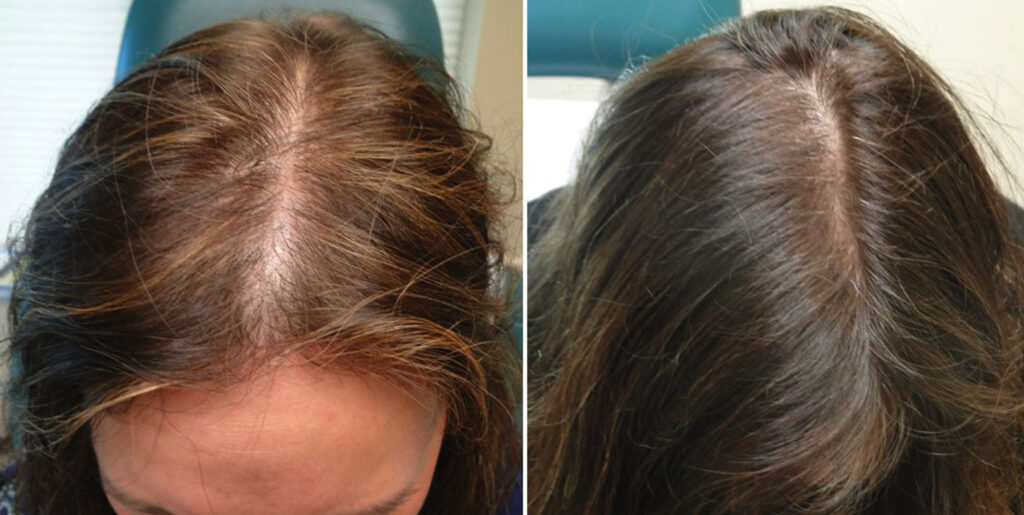
Hair restoration takes time. While PRP and growth proteins stimulate follicles quickly, visible results typically appear within three to six months. Think of this as a process, not a quick fix—each session builds upon the last, and every improvement is a step toward renewed confidence.
By committing to consistent treatments and nourishing your scalp, you’ll not only regain your pre-pregnancy fullness but also fortify your hair for the future.
Renewing Confidence with The Rapaport Hair Institute
At The Rapaport Hair Institute in Bergen County, NJ, female hair restoration is approached as both science and artistry. Our advanced suite of treatments is tailored to each patient’s unique needs and stage of postpartum recovery.
Every detail matters—from diagnostic imaging with HairMetrix to personalized follow-up care that keeps your progress on track. It’s not just about restoring hair; it’s about restoring the sense of self that shines through when you feel whole again.
Guided by board-certified dermatologist Dr. Jeffrey Rapaport, a published researcher with over 30 years of experience in regenerative dermatology and hair restoration, The Rapaport Hair Institute brings science and artistry together to renew confidence from the inside out.
Building on his published studies on exosomes and PRP-derived extracellular vesicles, Dr. Rapaport continues to refine how regenerative signaling supports postpartum and female-pattern hair recovery.
This season, give yourself the gift of renewal. Whether you’re a few months postpartum or years past childbirth, your hair still has the potential to thrive. With the right care, guided by experts who understand both the science and the sensitivity behind women’s hair loss, your confidence can grow back—strand by strand.
Call today to schedule your consultation and experience evidence-based care that helps your hair—and confidence—grow back, strand by strand.
DISCLAIMER: These formulas should only be introduced under professional guidance after breastfeeding has concluded to ensure safe and optimal results.